
Exploring the Nation’s Capital Barrier-Free
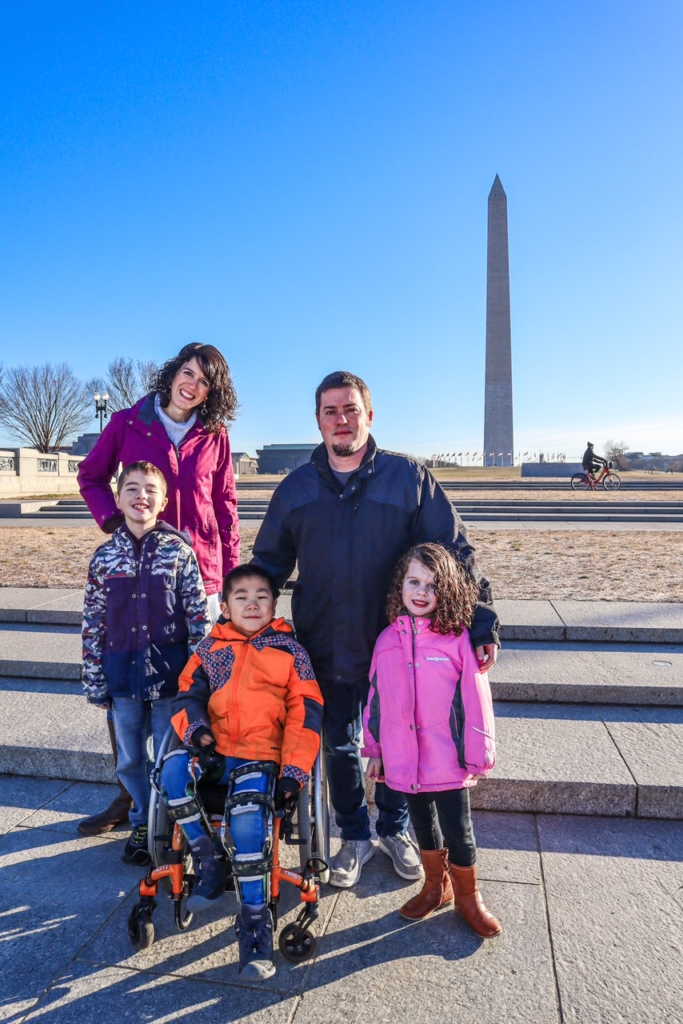
Washington, D.C. is hands-down the most wheelchair accessible city we’ve ever visited. I would recommend it any time, but with America’s 250th birthday celebration it would be silly not to plan a trip now! You may want to plan your trip around one of the special birthday celebrations.
For families traveling with disabilities, it’s a dream come true: museums with ramps and elevators, historic monuments with elevators and accessible entrances, and a public transit system that’s fully accessible for wheelchair users. Add in a backdrop of history, free attractions, and family-friendly fun, and you’ve got one of the best accessible cities in America.
Washington, D.C. invites you to explore over and over again at your own pace. Push through endless museums and monuments in an action packed week, or stroll and gaze at the cherry blossoms over a relaxing weekend. No matter how you approach the city, there will be plenty left to do next time. Accessibility and family fun coexist beautifully here. This guide has everything you need to plan a trip that’s fun, inclusive, and easy to navigate.
Looking to extend your stay? Fairfax County, just across the Potomac River, offers even more accessible adventure – including national park waterfalls, a drive thru safari, and more Smithsonian museums – all within minutes of downtown D.C. (Check out our Accessible Fairfax County Guide for more ideas.)
Why Visit Wheelchair Accessible Washington, D.C.?

Washington, D.C. stands out for more than its monuments. It’s clean, historic and modern all at once, and nearly every major attraction is free. For families with mobility needs, that combination of accessibility and affordability makes it one of the most rewarding cities to explore. It’s one of only two places that we visit on repeat (the other is the Adirondacks for an incredible accessible outdoors getaway).
Iconic Landmarks
The National Mall is the heart of the city, and your trip. Orient your plans around this sweeping, open space lined with America’s most famous memorials and Smithsonian museums. Roll up to the Lincoln Memorial (via accessible elevator), take a trip to the top of the Washington Monument, or take in the White House from Pennsylvania Avenue. Smooth, wide sidewalks and ramps make it easy to experience the magic of the capital without barriers.
Cultural Experiences
From the Smithsonian Institution’s 17 museums to the Kennedy Center’s exceptionally inclusive performances, D.C. is a cultural hub that celebrates accessibility. Every Smithsonian museum offers free admission, elevators, ramps, and wheelchairs for loan. At the Kennedy Center, you’ll find sign-language interpretation, assistive listening devices, and designated wheelchair seating.
History That’s Alive
You can feel the weight of history in D.C., but it’s presented in a way that welcomes everyone. At Arlington National Cemetery, accessible paths guide visitors through the grounds. The Library of Congress offers ADA-compliant tours of its stunning architecture. And even in historic neighborhoods like Georgetown, with its bumpy cobblestone, restaurants and shops are increasingly making accessibility a priority.

Getting There and Around: Accessible Transportation in Washington, D.C.
Navigating Washington, D.C. is refreshingly easy for wheelchair users and families alike. The city’s public transportation system, rideshare options, and layout make it one of the most accessible capitals in the world.
Accessible D.C. Metro System
All D.C. Metro stations are equipped with elevators and ramps, and trains feature designated wheelchair spaces. Metro’s app provides real-time elevator updates — a helpful feature if you’re planning to transfer between lines. Purchase a SmarTrip Card for contactless travel and easy fare payments.
Accessible Buses
Every city bus in D.C. has a low-floor ramp or lift, priority seating, and designated wheelchair spaces. The DC Circulator is particularly convenient for visitors — it’s fully accessible, affordable ($1 per ride), and connects major attractions like the National Mall, Georgetown, and Union Station.
Accessible Taxis and Rideshares in D.C.
Wheelchair-accessible taxis (WAVs) are available through companies like Yellow Cab and Royal Cab, offering minivans with ramps. Uber’s partnership with MV Transportation also makes it easy to book a WAV through the Uber app, with average wait times of 15 minutes or less.
For airport transfers, both Dulles and BWI airports maintain accessible taxi fleets.
Driving and Parking
If you’re driving, D.C. recognizes all out-of-state disability placards. You can park for free at metered spaces and stay twice the posted time limit. This is a major perk, if you’re able to find an accessible space. If street parking is your plan, leave extra time to circle the block. You may also end up parking a little farther away. Some garages offer accessible parking spots near elevator access, but those spaces also fill up quickly.

When to Visit Washington, D.C.
We love D.C. in every season! Each season offers a unique accessible experience. Any time of year, there are festivals and events taking place around the city. It’s always wise to check the calendar before you go. Here’s what to expect:
Spring: Cherry Blossoms
March to May in D.C. is pure magic… but the masses know that. The National Cherry Blossom Festival paints the city in pink, and the Tidal Basin offers accessible pathways lined with blooming trees. This is something you absolutely must see at least once in your life. The crowds can be overwhelming, so I suggest a midweek visit if you can swing it… and a return visit to see the real Washington D.C.. The weather in springtime varies pretty drastically, so come prepared with layers for cold blustery days and warm sunshine!
Another springtime hit, after the blossoms have faded, is the Around the World Embassy Tour. Several of the embassies host open houses and there are fun events, parades, and special treats to make it feel like a worldwide tour in a weekend.

Summer: Festivals and Sunshine
Summer brings long days, warm sunshine, and lively events. From the Wharf to Georgetown, and everywhere in between there’s always something fun going on. Check out Jazz in the Park, the Smithsonian Folklife Festival, or the National Book Festival. Temperatures can hit the 90s, so plan indoor museum visits during peak heat. Accessible buses and Metro stations offer air-conditioned relief between stops.
Fall: Crisp Air and Quiet Streets
September to November is a hidden gem season. With cooler weather and fewer tourists, it’s perfect for relaxed exploring. Fall foliage adds color to the Mall and Georgetown waterfront, and hotel rates dip after Labor Day.

Winter: Peaceful and Festive
From December to February, D.C. transforms into a calm, twinkling wonderland. There are pop up ice skating rinks (all of which allow you to skate in your wheelchair), light shows, and festive holiday events. The crowds disappear, attractions stay open, and accessibility remains excellent. Bundle up and enjoy the ZooLights Festival at the National Zoo and roll through Georgetown’s light displays. Our repeat favorites are roasting s’mores and skating at the Wharf. Gaylord National Harbor hosts the ICE festival, but even wandering the hotel and area decorations is next-level magic.
Where to Stay: Accessible Hotels and Family-Friendly Stays in D.C.
We’ve typically stayed with HomeExchange when we visit D.C., so we don’t have a lot of places to personally recommend. That said, if you’re not a HomeExchange member, Wheel the World has several accessibility verified hotels in Washington D.C.. You can book through their page, filtering for your specific needs, with a money back guarantee. If you’re not using Wheel the World:
Accessibility Tips for Lodging

- Always confirm room dimensions and bathroom setups directly with the hotel or HomeExchange host.
- Ask about bed heights, grab bars, and space for mobility equipment.
- Look for properties near Metro stations. This makes spontaneous exploring easier for families.
I recommend staying in the Capitol Hill area. It’s an easy, accessible, family friendly location. Georgetown is popular, but we found it a lot harder to navigate with a wheelchair and we were more limited with accessible options for dining and shopping.
What to See, Do, and Eat in Wheelchair-Accessible Washington, D.C.
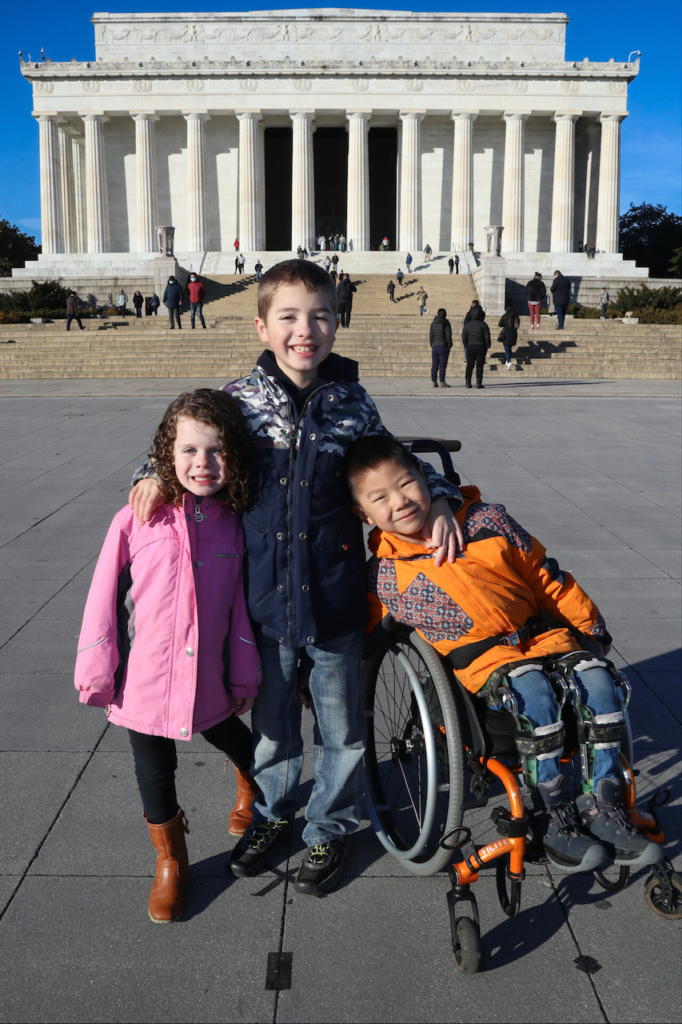
Surely I’ve convinced you that you need to head to D.C., so let’s get into the fun!
Top 10 Wheelchair Accessible Attractions in Washington D.C.
From monuments that define the nation to kid-approved museums and green escapes, Washington, D.C. makes accessibility part of the experience—not an obstacle.
1. International Spy Museum
I’m going to start with something a little unexpected, as one of the only museums in the city that isn’t free, but it’s absolutely worth it and I don’t want you to miss it. The International Spy Museum puts you undercover from the moment you enter. You’ll be given a new identity and a mission to complete – all while learning about the history, tech, and recent happenings in the real spy industry. It’s captivating for all ages, with activities across interest and ability levels. It will absolutely blow your mind.
The Museum is fully accessible for guests with mobility disabilities or in wheelchairs:
- Elevators provide access to all floors and exhibits.
- All restrooms in the Museum complex are accessible. Family/companion restrooms are located on all Museum public floors.
- Family/companion restrooms are open to all genders.
- All theaters include wheelchair locations.
2. The Smithsonian Museums
The Smithsonian Institutions are D.C.’s ultimate family treasure hunt.
- Every museum is free and fully accessible with elevators, ramps, and accessible restrooms.
- Wheelchairs are available for loan at entrances.
- Accessible entrances are almost always on the side or around back. Check this first, since around back can mean two blocks way.
Families often start with the National Museum of Natural History (think dinosaurs, butterflies, and a life-size whale) and the National Air and Space Museum, home to rockets and hands-on exhibits perfect for curious kids. We repeat-visit these on many of our trips because the kids love them and there’s always something new to see.
All of these museums run programs throughout the week. Check the schedule before you go to plan for any shows or interactive opportunities. My kids especially love holding the hissing cockroaches at the Museum of Natural History, but I prefer the children’s theatre options.
BONUS: You can visit the Butterfly Pavilion at the Smithsonian National Museum of Natural History for free on Tuesdays. A timed-entry ticket is still required and must be obtained on-site at the pavilion’s ticket desk.
3. The National Mall
Stretching from the Capitol to the Lincoln Memorial, the Mall is a flat, open promenade ideal for wheelchairs, scooters, and strollers. Paved paths link every major site. Food trucks often line the perimeter and there are overpriced snack options within.
Don’t miss: the World War II Memorial’s fountains, the Vietnam Veterans Memorial’s reflective wall, and the Korean War Veterans Memorial’s haunting statues. The carousel is closed as I’m writing this, but the plan is to have it open and wheelchair accessible in 2026!
4. Lincoln Memorial
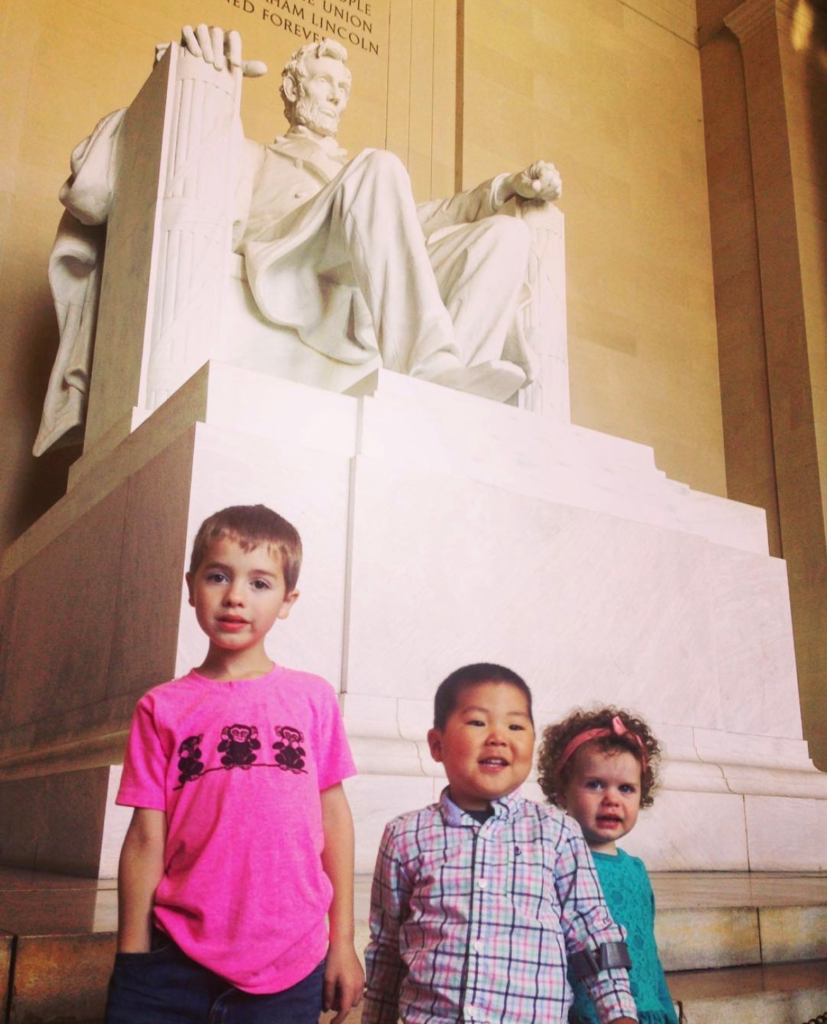
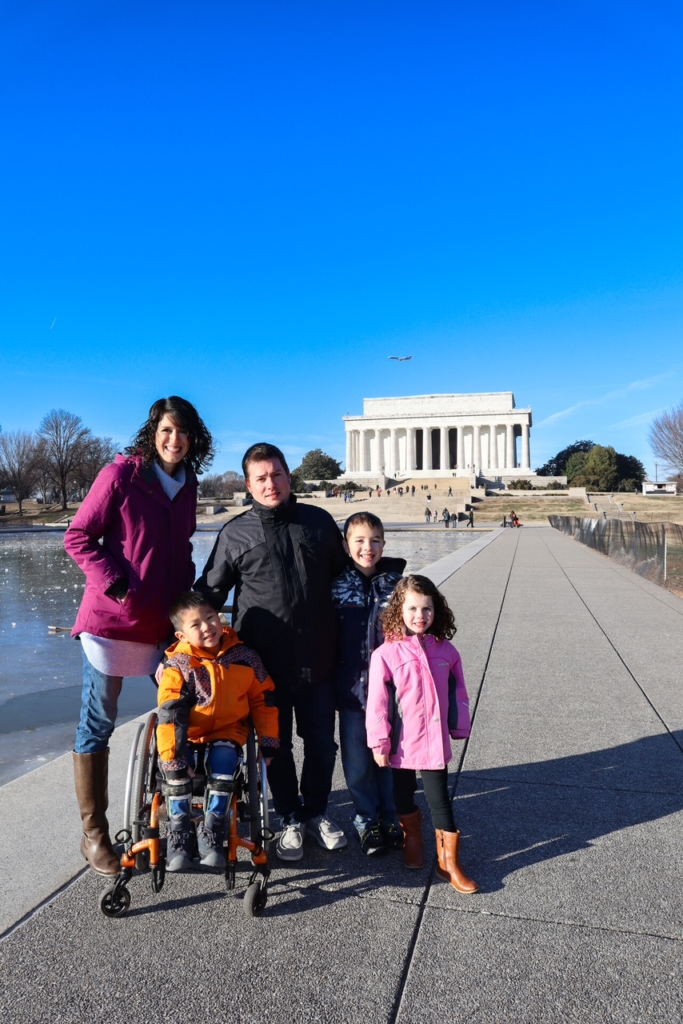
Impressive from far away, but even better up close. Accessible via elevator on the south side (left, if you’re facing the building), this iconic tribute gives panoramic views across the Reflecting Pool. The National Park Service even offers free two-hour wheelchair rentals here.
5. The White House and Lafayette Square
So… we’ve never been responsible enough to land a White House tour, but they are wheelchair accessible! Tours require advance booking through a congressional office, but the perimeter sidewalks and Lafayette Square are also fully accessible. Kids love spotting the snipers on the roof (because of course they do).
6. The National Zoo

One of the only places you can see pandas in the U.S.. Part of the Smithsonian, the national zoo offers accessible routes to see elephants, lions, and the famous giant pandas. D.C. Zoo admission is free, but parking lots charge $25/day. If you’re driving, head into town just past the zoo (the zoo entrance will be on your right). There’s one free accessible parking space on the second street on your left, Macomb St NW.
Wheelchairs and scooters are available for rent near the entrance.
7. The Kennedy Center for the Performing Arts
The Kennedy Center has become known for its attention to inclusion, so you know people of all abilities will be able to enjoy a barrier-free experience, here. A cultural crown jewel offering accessible seating, assistive listening, and sign-language-interpreted performances.
BONUS: Don’t miss the free Millennium Stage shows offered daily—perfect family entertainment at zero cost.
8. The Wharf
The Wharf is a long walk or a short drive from the mall offering waterfront views endless food options, a water taxi, and fun events. There’s an accessible kayak launch (which we’ve never used), swings (which we always use), and free family lawn game areas. Don’t miss the seafood and s’mores.
7. Library of Congress
Ok, we actually haven’t done the Library of Congress yet, either. But, the plan is to center our next trip around this one with the National Book Festival – dreamy for a writer. The Thomas Jefferson Building’s Great Hall is breathtaking and wheelchair-friendly via ramps and elevators. Docent-led tours accommodate mobility devices and service animals. I’ll have more to say when we’ve done it with the whole crew!
8. Arlington National Cemetery
Accessible shuttle routes, a metro station with an elevator and paved paths make Arlington manageable for all visitors. The Tomb of the Unknown Soldier and JFK’s Eternal Flame are both reachable via barrier-free routes.
10. Planet Word
Planet Word is a newer museum, but it quickly became one of our favorites. Planet Word is the only museum in the country dedicated to renewing and inspiring a love of words and language. That may sound boring, but it’s the most interactive museum we’ve visited. The activities transcend age limits, making it a fun experience for everyone. Admission is by donation and reservations are required. There’s a ramped entrance just to the left of the main door. If you’re lucky, you may even snag the accessible parking space right out front, just past the entrance.
Family Favorites: Accessible Museums, Memorials & More
D.C. packs in a lot! Families often ask how to pace D.C. with kids and a wheelchair. Here’s what works in real life:
Hit Some Memorials – But Don’t Do Them All in One Day
Kids (and adults) are impressed by their size and significance, but walking the entire Mall in one stretch is a marathon. We did most of the northern half in a day, making it all the way across to The Wharf. It looked like this:
Make a prioritized list and map it out. Plan breaks for snacks or shade by the Reflecting Pool or in one of the gardens.
Our route: Capitol → Washington Monument → World War II → Vietnam Wall → Lincoln → Tidal Basin for the Jefferson Memorial. We detoured north for a peek at the White House—it’s worth the extra few blocks. You’ll also pass the National Gallery of Art, and the outdoor sculpture garden is just a hop to your right.
One Museum a Day Keeps the Overwhelm Away
Each Smithsonian could fill an entire day. Doing one lets kids linger without burnout. Start early, eat lunch in the museum cafeteria (most are fully accessible with prices you expect at a museum), and save the gift shop for the exit bribe. Put the museum in the middle of a memorial walk to mix things up.
Add a Day for the Zoo
The National Zoo is spacious and hilly. It needs its own day, and if you use a power chair you may want to bring a back up battery. We’ve actually never made it through the entire zoo in a day – there are just too many stops along the way. We’ve found the best accessible restrooms to be the ones right by the parking lot entrance, but there are accessible stalls in all restrooms.
All Zoo exhibits are wheelchair accessible via elevators and ramps, though the terrain is hilly. A lift in the visitor center lobby provides access to restrooms and water fountains.
Picnic at the Tidal Basin

During Cherry Blossom season, this is the most scenic spot in town. Accessible paths circle the water, and benches line the route. Bring snacks and soak it in. It’s worth the crowds. There are also several gardens as you pass through the mall, and you could always just picnic right on the mall grass, with views of towering memorials all around.
Bring Wheels for Everyone
Even kids who normally walk get tired after ten miles of exploring. Lightweight strollers, wagons, or chairs make the day more manageable with young kids. Even when my oldest was seven, all three kids ended up in the wagon by the end of the day.
Museums loan wheelchairs on a first-come basis. We typically use a personal chair, but on that wagon day it could’ve been a nice option for our son to have a wheelchair in the museum, while all three used the wagon when we were outside.
Plan Your Parking
If you’re driving, research garages ahead of time or bookmark one backup. Street parking is limited to three hours downtown; we like 500 C Street SW ($18 on weekends). Accessible spots fill fast—arrive early.
Beyond the Monuments: Wheelchair Accessible Hidden Gems and Local Finds
Once you’ve ticked off the classics, slow down and see the city’s personality. Washington, D.C. has over 200 museums and countless pockets of surprise.
Explore a Different Museum
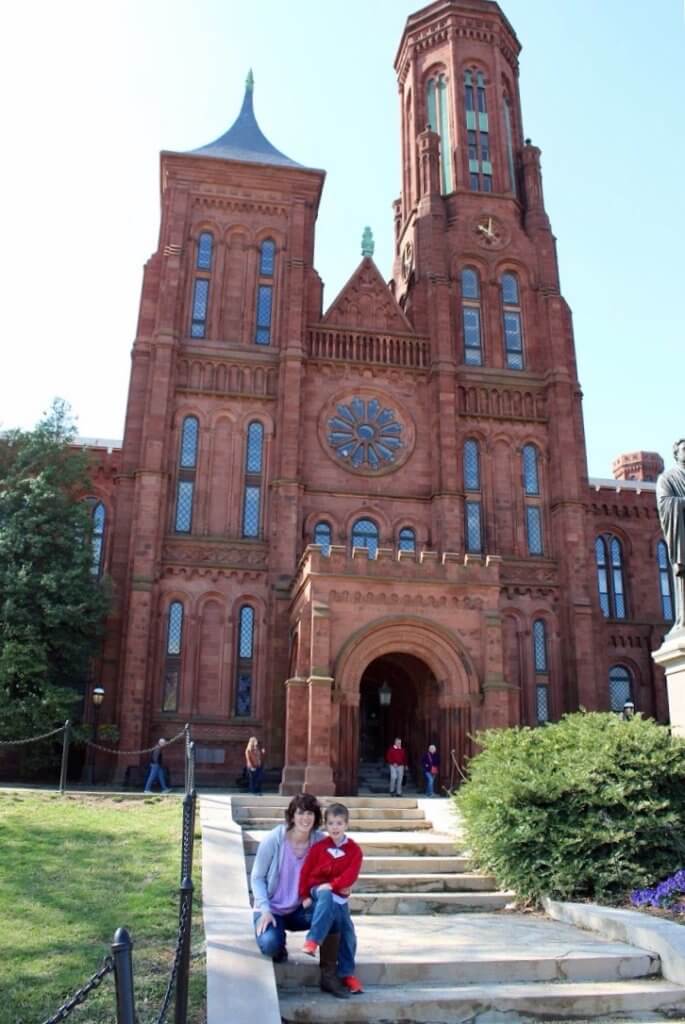
Try the Smithsonian Castle, the National Museum of African Art, the National Postal Museum or one of the other lesser known museums. They’re all free and easy to navigate in a wheelchair. Worst case scenario, it’s not what you were hoping for and you just pop out and into the next option.
Catch a Show
The Kennedy Center’s Millennium Stage offers free daily performances. The Discovery Theater (presented by the Smithsonian) hosts kid-friendly shows that blend education and fun. Summer brings outdoor movies across the city and there’s always live music happening somewhere.
Find a Different Memorial or Garden
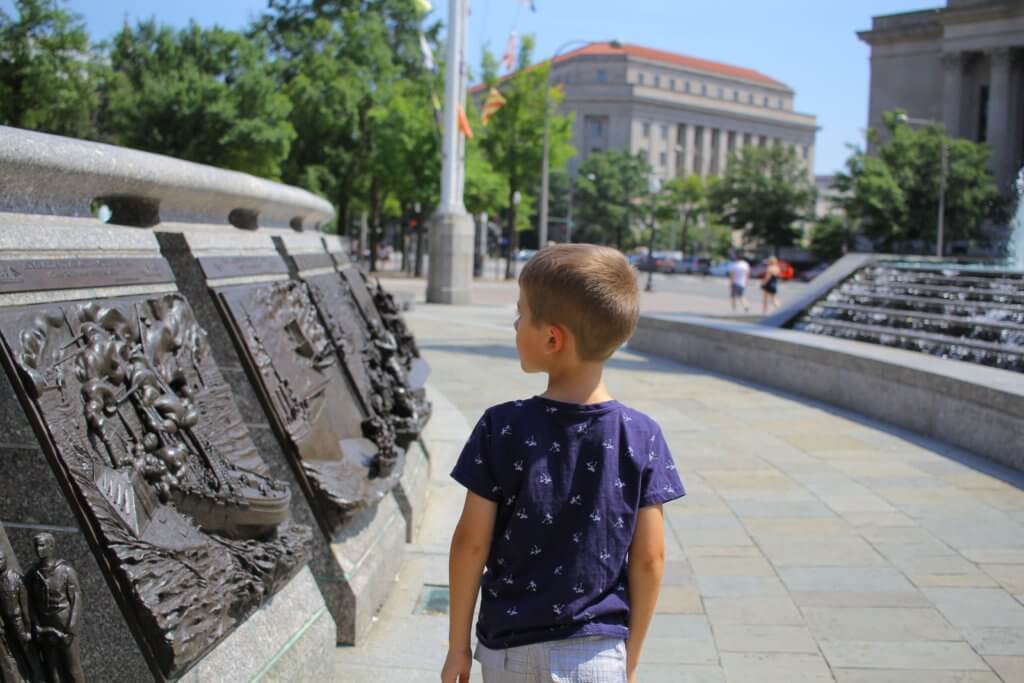
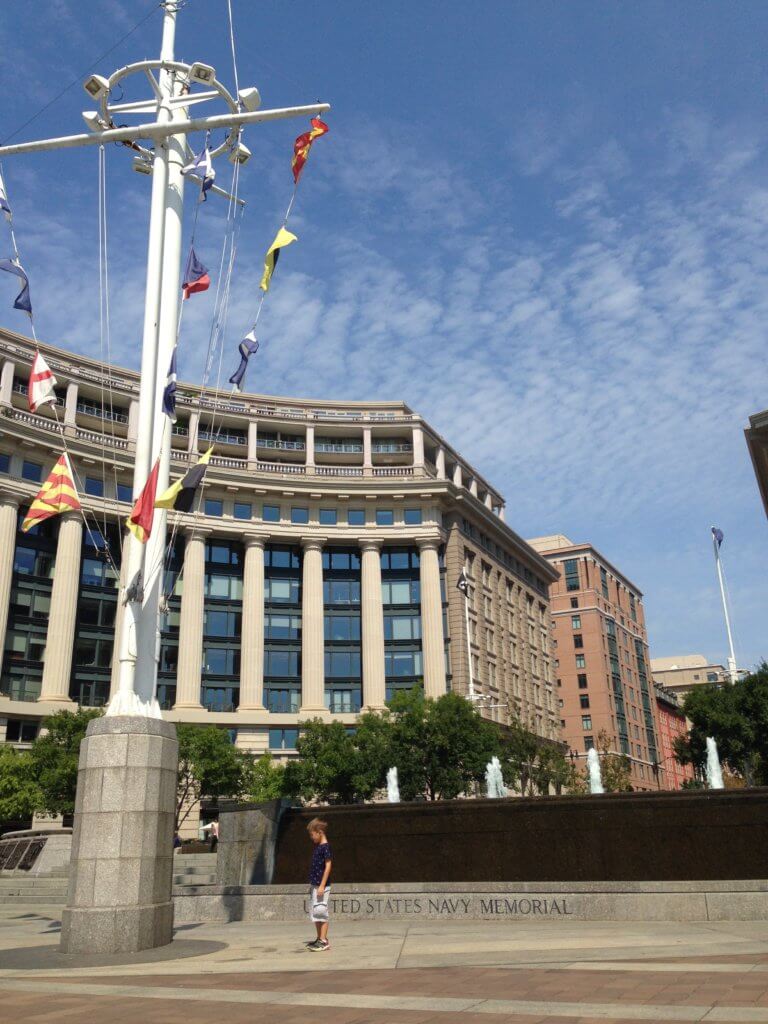
D.C. is sprinkled with lesser-known spots: the U.S. Navy Memorial, the Bishop’s Garden at the National Cathedral, and the Sculpture Garden outside the National Gallery of Art. Each is fully accessible and refreshingly quiet compared to the Mall.
Visit the Suburbs
Extend your trip to Mt. Vernon, the National Arboretum, or Alexandria’s Old Town—each just a short drive and all increasingly accessible. Want more family fun nearby? See our Accessible Fairfax County Guide for parks, museums, and adaptive recreation.
Accessible Dining in Washington D.C.
If you only hit the mall, your food options are food trucks and the cafe in the Air and Space Museum. Granted, there’s quite the variety of food trucks, which can help get through a long day of museums and memorials, but don’t end your day here. Here are some of our wheelchair accessible D.C. restaurants you shouldn’t miss:
Eat Like a Local
Step away from the food trucks and discover why D.C. is a culinary melting pot. Our favorites blend history, flavor, and accessibility:
It was everything the reviews said it would be: mildly overpriced breakfast food in an outdated but authentic shop with excellent service. They seat whoever will fit at a table and we had the chance to meet interesting people from around the world… as well as some locals.
Teaism
I dare you to step inside the restaurant, take a deep breath, and leave without ordering anything. Go ahead. Try. Let me know how that works out for you. D.C. Asian-inspired comfort food and tea.
Union Market
Indoor food hall with ramped entrances and plenty of seating.
Ethiopian restaurants on U Street
The city is famous for them and many are fully accessible.
The Wharf
Municipal Fish Market has become a regular stop, but the entire wharf is lined with food options. Twisted Pretzels is run by people with disabilities. They serve up delicious pretzels and sandwiches with easy roll-up outdoor ordering.
Astro Donuts
It’s just donuts and fried chicken, but they’re famous for a reason. I’m not sure who thought to put the two together, but they’re a genius.
Up Next on My List
We haven’t eaten at these, yet, but they have rave reviews and are described as accessible. I’m not able to verify deliciousness, cost, or accessibility from personal experience, but they’re next up on my list!
Ben’s Chili Bowl
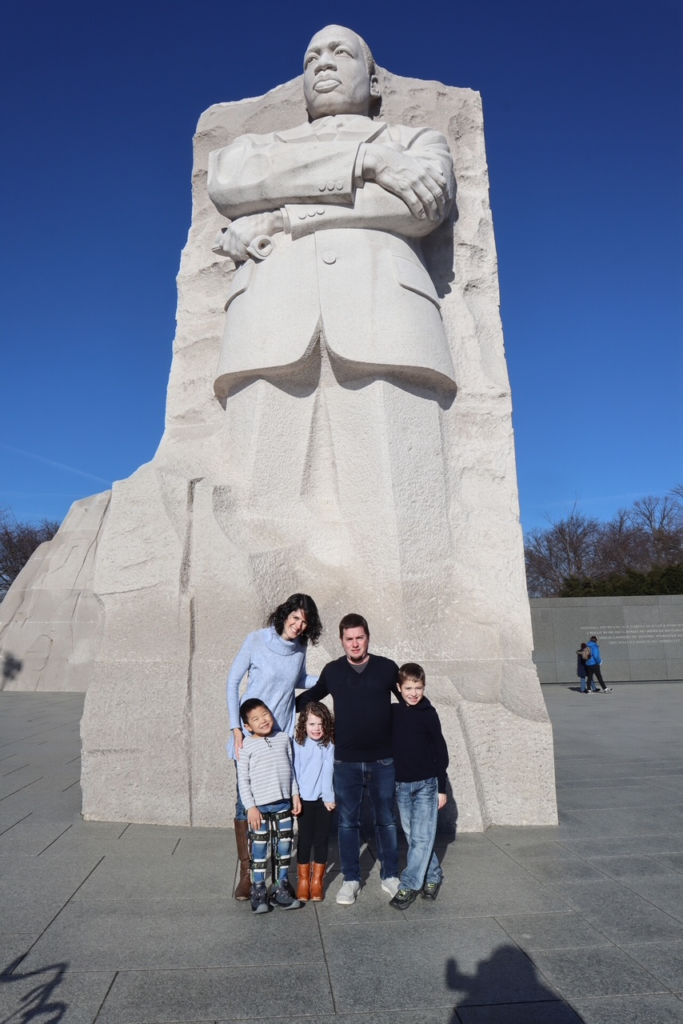
A legend since 1958. Ground-level entry, ample space inside, and a story as rich as its chili dogs. Grab a photo on your way out under the mural of civil-rights icons.
Founding Farmers
Three blocks from the White House, this farm-to-table spot is owned by a co-op of family farmers. Fully accessible with street and garage parking nearby. Try the chicken and waffles (you’ll thank me later).
Busboys and Poets
Part restaurant, part community hub, named for Langston Hughes. Accessible entrances, wide aisles, and regular spoken-word events make it a must for culture lovers.
Le Diplomate
A Parisian experience in the heart of D.C. Indoor and outdoor seating are step-free, and valet parking helps simplify arrival. Reserve ahead—tables fill fast.
Accessible D.C. Travel Tips and FAQs
Travel Tips for Families Exploring Washington, D.C. in a Wheelchair

D.C. may be one of the most accessible cities in the U.S., but a few insider tips are helpful for a smooth visit.
1. Pace Your Days
Plan one major attraction per day. The museums are so much more than you expect, and the National Mall is deceptively large. Taking time to rest between stops makes the experience far more enjoyable for everyone.
2. Pack Smart
Bring refillable water bottles, snacks, sunscreen, and portable chargers. There aren’t many food options near the monuments, and the vendors that do exist are pricey.
If you’re visiting in spring, bring a lightweight poncho—cherry blossom weather can change fast.
3. Use Wheels Wisely
Even if your kids are typically mobile, consider a stroller or wagon. For wheelchair users, museum rentals are available but limited; bringing your own or reserving from ScootAround or Orthopedic Mobility Rentals in advance guarantees availability.
4. Leverage Free Parking Benefits
Display your disability placard clearly. D.C. allows free parking at metered spaces and double time limits. This is our favorite way to find accessible parking in D.C., but it’s always wise to have a back-up lot in mind in case you can’t find street parking.
5. Stay Connected
Download the WMATA (Metro) app for elevator updates and route planning.
6. Explore Early or Late
The National Mall and monuments are most peaceful before 10 a.m. or after 5 p.m. Sunrise over the Lincoln Memorial or an evening roll by the lit-up Reflecting Pool are unforgettable experiences.
7. Plan Rest Stops
Family restrooms are located throughout the Smithsonian complex and in major Metro stations. The Air and Space Museum has an adult size changing table – the only adult size changing table in D.C. that I know of.
8. Visit During Shoulder Seasons
If you’ve already captured the splendor of Cherry Blossom season, fall makes the ideal trip. The difference in crowds is drastic, the temperatures are ideal, and the events are still going strong.
Frequently Asked Questions About Wheelchair Accessible Washington, D.C.
Is the Washington D.C. Metro wheelchair accessible?
Yes! Every Metro station has elevators and ramps, and all trains include designated wheelchair spaces. Check the WMATA website or app for live elevator status updates before heading out.
Are D.C. museums and monuments free?
Almost all major attractions are free, including every Smithsonian museum, the National Zoo, and most memorials. The Spy Museum and other privately operated museums charge admission.
Can I use my handicap placard from another state in D.C.?
Absolutely. D.C. honors all state-issued disability placards. You can park for free at metered spaces and stay twice the posted limit.
Where can I rent a wheelchair or scooter in D.C.?
We’ve never done this, but services like ScootAround and Mobility City deliver wheelchairs and scooters directly to your hotel. Some museums, including all Smithsonians, also loan chairs on a first-come basis.
Are there accessible restrooms near the National Mall?
Yes. Most Smithsonian buildings and major monuments have accessible restrooms. The best central options are the Air and Space Museum (the only adult size changing table in D.C.), Museum of American History, Museum of Natural History, and The Capitol Visitor Center.
What’s the best time to visit D.C. with kids?
Spring and fall. The cherry blossoms (March–April) are spectacular, and fall’s crisp weather makes outdoor exploring easy. Both seasons balance comfort and crowds beautifully.
What are the most accessible family-friendly restaurants in Washington D.C.?
I suggest Union Market or The Wharf for endless choices with unlimited accessibility.
Is D.C. good for travelers with sensory sensitivities?
Yes. Many museums offer sensory-friendly hours or quiet spaces. The National Museum of Natural History and Air and Space Museum are especially family-conscious, and staff are trained in accessibility support.

Day-Trip Idea: Extend Your Adventure to Fairfax County
It’s a natural extension of your D.C. trip—less crowded, just as inclusive, and filled with hidden gems. Check out our full Wheelchair Accessible Fairfax County Guide to plan the perfect add-on with a drive-thru safari, LEGOLAND Discovery, and one-of-a-kind Army museum.
Accessible Adventures Beyond the Capital
If you’re making an east coast road trip, it’s worth paying attention to these other nearby accessible destination favorites:
Wheelchair Accessible Richmond, Virginia: Accessible trails, gardens, and history
- Wheelchair Accessible Williamsburg, Virginia: The Largest outdoor living museum, Great Wolf Lodge, and accessible parks and beaches
- Wheelchair Accessible Virginia Beach: Accessible beaches, playgrounds, museums, gardens, and more.
Conclusion: Wheelchair-Friendly D.C. Is for Everyone
Exploring Washington, D.C. with a wheelchair isn’t just possible: It’s empowering. D.C. is a reminder of what travel used to look like, and what it should look like for everyone. From free accessible museums to barrier-free public transit, D.C. invites families to experience history, culture, and fun without limits.
Wonders Within Reach strives to enable and inspire all families to get out and explore, because joy, adventure, and discovery shouldn’t have barriers.
Ready to plan your next accessible trip?
Explore more destinations, itineraries, and resources at Wonders Within Reach. Let’s make the world a little more open—one journey at a time.