
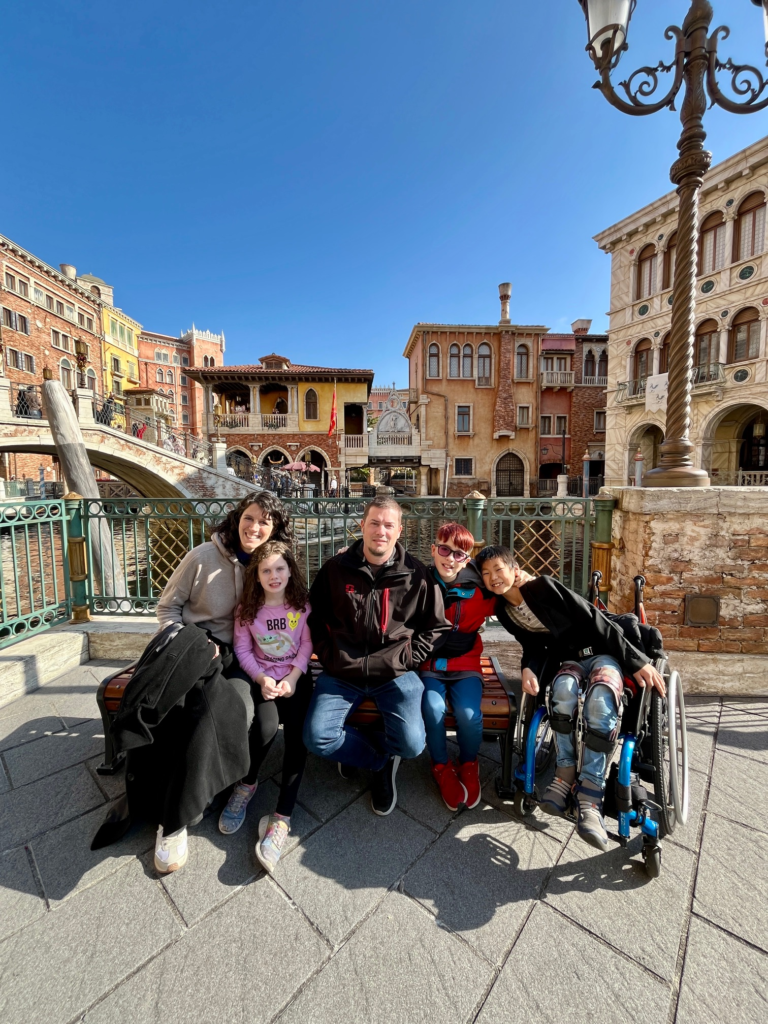
Tokyo DisneySea is often described as one of the most beautiful theme parks in the world. Visually, it absolutely lives up to the hype. Not only is the park stunning, it’s unique. There may be five Disneyland parks, but there’s only one DisneySea. It’s a completely different experience, with the park built around the water and the parades taking place on boats. Accessible DisneySea allows you to roam the streets of Venice or dive under the sea with the Little Mermaid through one-of-a-kind park worlds.
If you’re visiting as a wheelchair user, or traveling with someone who has a mobility disability, the experience is a bit complicated.
If you’re researching wheelchair accessible DisneySea, here’s what our visit was really like: the good, the challenging, and the things I wish I’d known before we went.
DisneySea Disability Documentation: What’s Required for a Disability Discount or Access Pass
If you do not have a disability card (as issued by Japan and many European countries), DisneySea requires a hand-signed note from your doctor naming and explaining your disability. This would be similar to a letter of medical necessity used to obtain Medicaid or a national park pass.
A printed letter from a patient portal does not count. Oops.
This is critical to know ahead of time. Without the correct documentation, accessibility accommodations may not be granted, no matter how obvious your disability may be.
Disability Discounts at DisneySea
DisneySea does offer a disability discount, but there are important limitations:
- The discount applies to one guest with a disability and one companion
- Tickets must be purchased directly through Disney
- Discounted tickets must be placed in a separate order
- In order to use your ticket, you must bring your disability documentation to the park
We ordered our tickets in two batches – one for the disability ticket and companion, and one for the rest of the family. Once we linked our tickets through the Tokyo Disney app, they all came up together.
Getting to DisneySea With a Wheelchair
One of the easiest parts of our day was actually getting to DisneySea with a wheelchair.
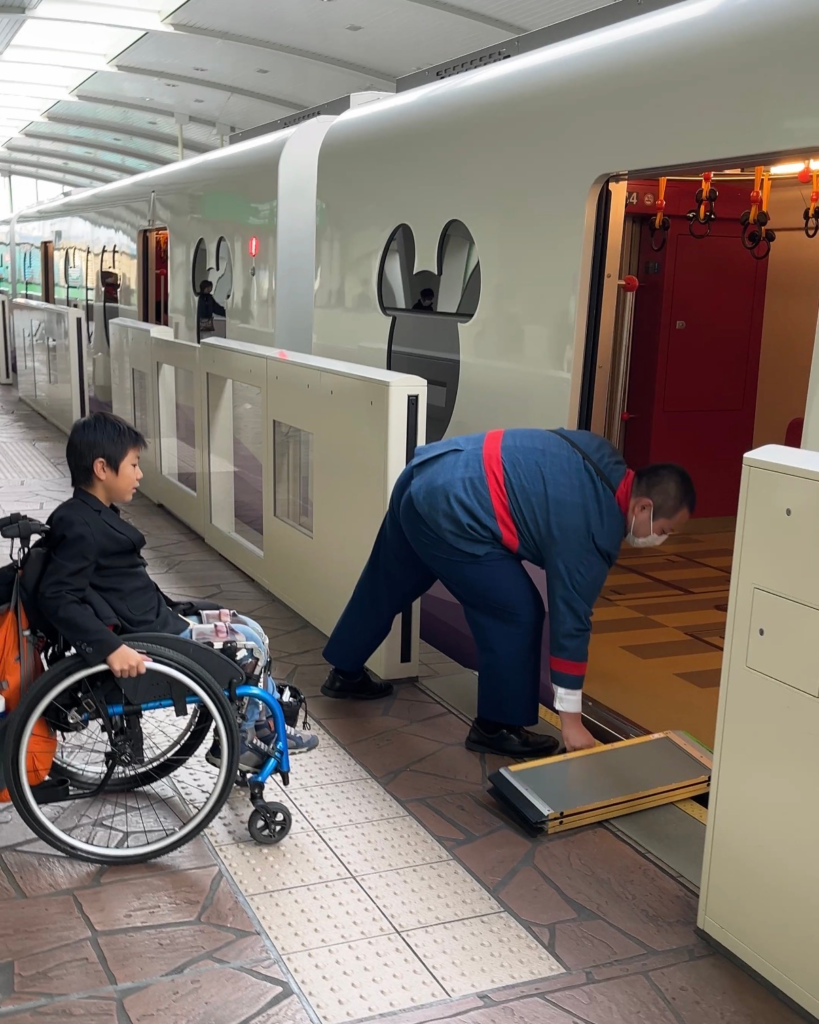
DisneySea is very accessible from central Tokyo using public transportation, with step-free routes, elevators, and clear signage throughout the journey. There were bold signs in all of the major stations directing you towards Disney. Once we arrived at the Disney monorail, a cast member spotted us immediately and asked if we would like assistance. He escorted us through getting our tickets, took us to the wheelchair elevator, and pulled out a portable ramp to bridge the already small platform gap.
If navigating cities with a wheelchair usually seems stressful, this part of the experience may pleasantly surprise you.
Navigating the Park: Paths, Seating, and Restrooms
From a mobility standpoint, DisneySea is thoughtfully designed. Once you exit the monorail, you’ll wait in line for the elevator and then make your way to the long park entrance lines.
The security check is similar to other Disney parks. They’ll take a quick peek inside your bag to make sure you’re adhering to park rules. Snacks and water bottles are allowed, but any full meals need to be left outside the park. There are lockers and restrooms below the monorail station on your way to the park entrance.
Once you’re inside, don’t worry about heading to Guest Services for a disability pass. That’s not how it’s done here! I stopped in, even though I’d researched ahead of time, just to be safe, but they just sent me away. You’ll check in with a cast member at each ride to use your pass. The first stop takes a little longer, as they link your tickets, but you’ll get used to finding someone at the ride entrance to use your pass.
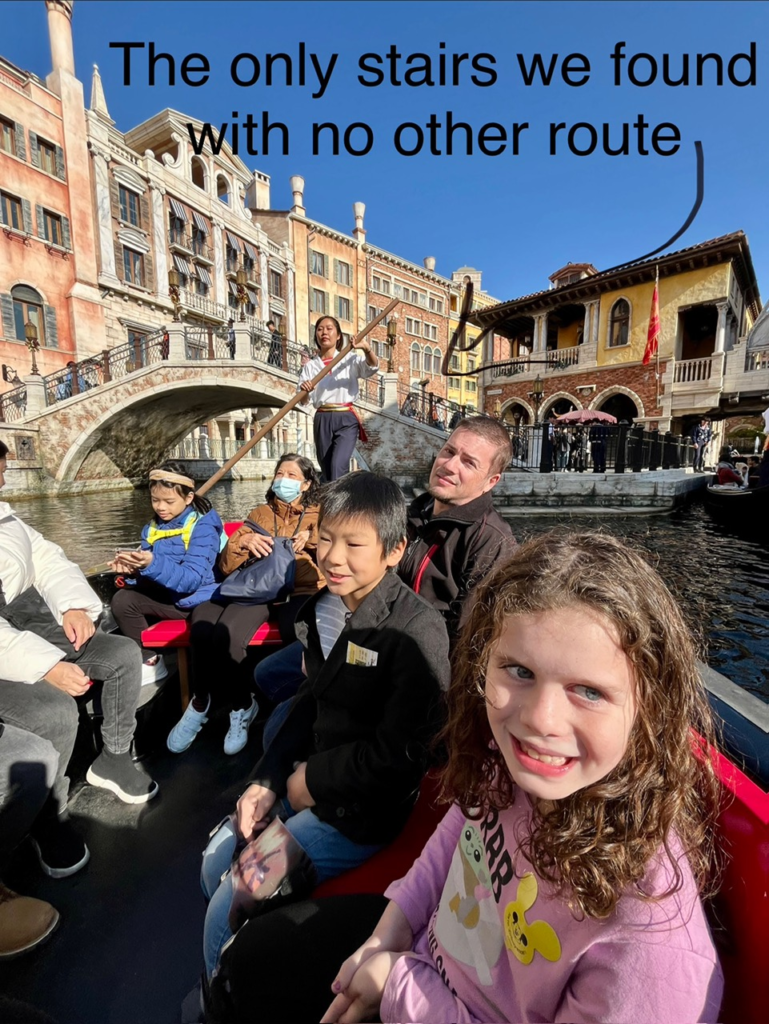
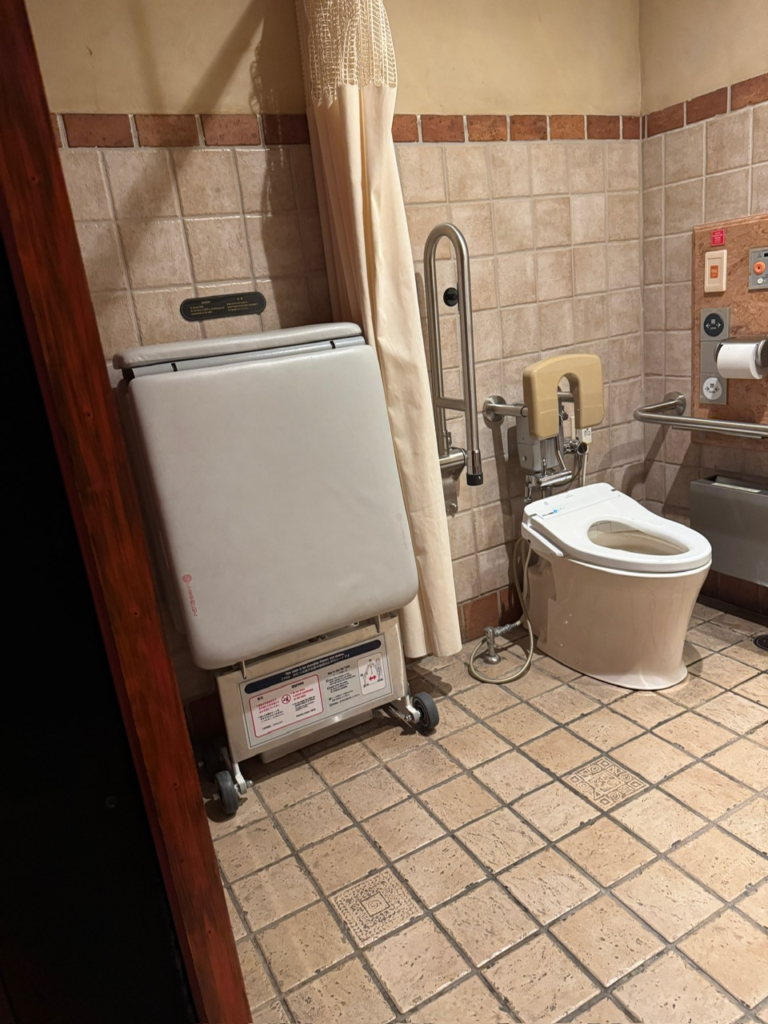
Paths throughout the park are wide, smooth, and easy to navigate in a wheelchair. Accessible restrooms are located throughout the park, and cast members are helpful if you need assistance locating one. The accessible restrooms are generally large companion restrooms with automatic doors, large changing tables, double hand rails, roll under sinks, and automatic hand dryers and flushers. If you require an adult-sized changing table, ask a cast member directly. They do exist, but they are not always clearly marked. Even the regular changing tables are significantly larger than what you see in a typical restroom. My 60 lb child would fit without a problem.
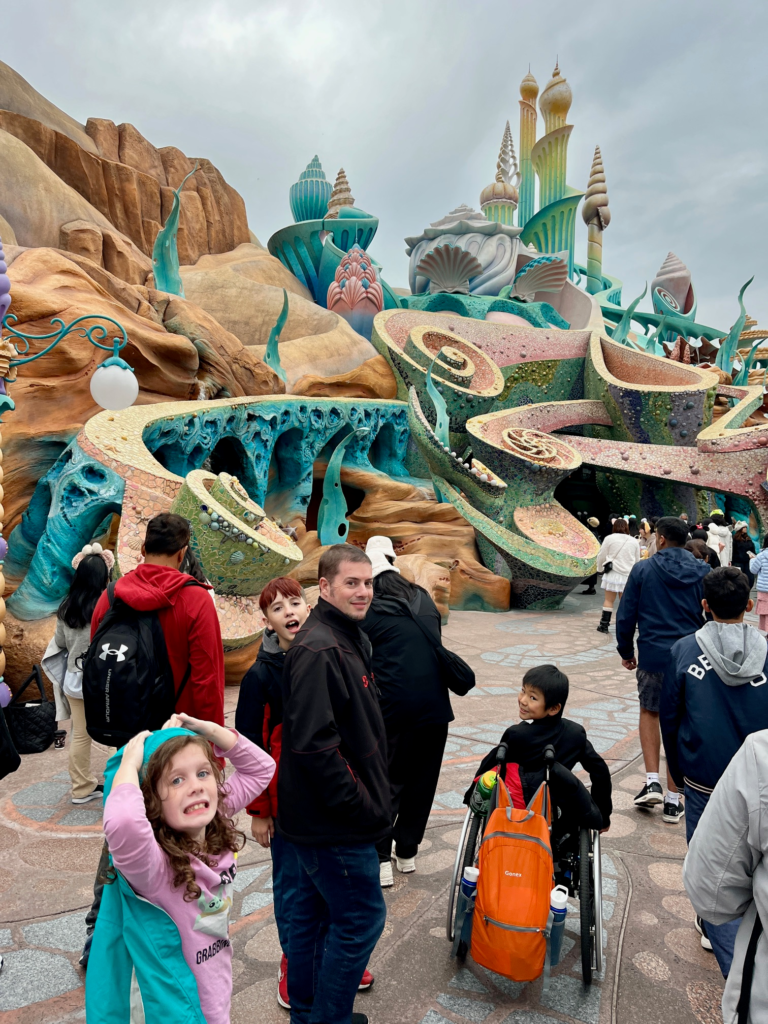
One of our favorite spaces was the indoor splash pad in Mermaid Lagoon. It’s fully wheelchair accessible, playful, and weather-proof. Even in winter, it’s a great place to pause, reset, and let kids just be kids… just make sure you’re prepared to get wet! If you wander beyond the splash pad, you’ll find an accessible labyrinth and a large play area. There’s a ship to climb on, which isn’t accessible, but the rest of the play area creates a magical space for imagination and burning off energy.
Ride Accessibility at DisneySea: The Hard Part
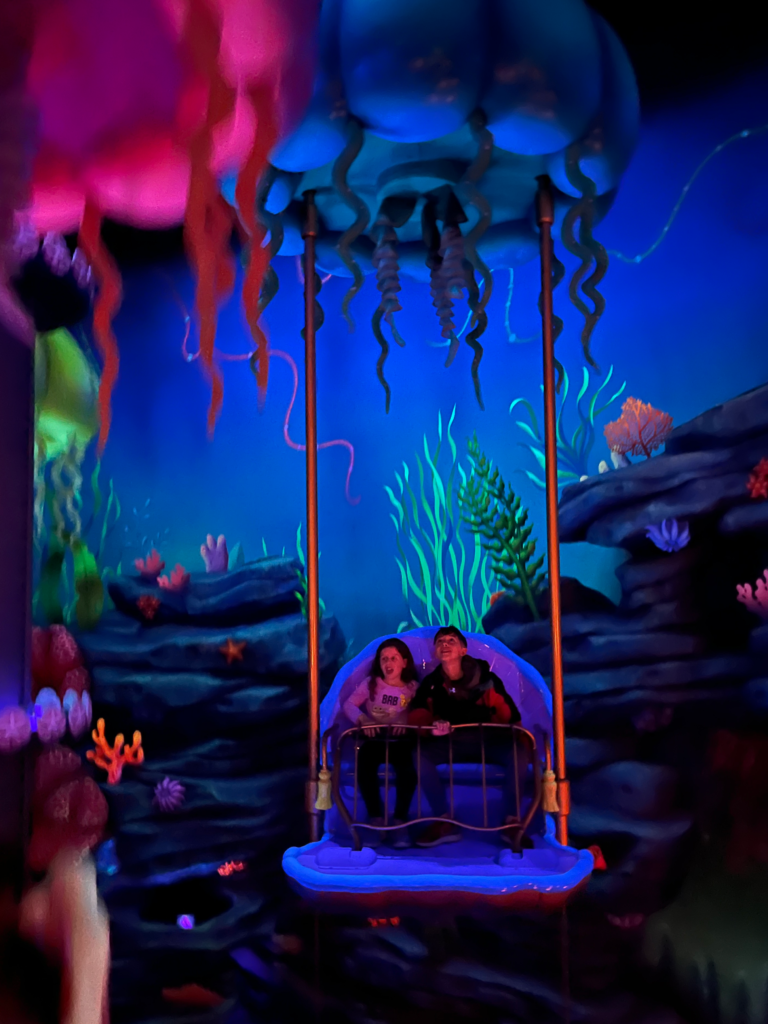
This is where expectations need to be managed.
DisneySea Access Program
A Tokyo DisneySea access pass is activated at each ride. The ride attendant will go through a series of questions, through a text translator, asking about the disability, limitations, ability to handle individual ride requirements like sitting independently or bending at the knee, and confirming your ability to navigate emergency evacuation routes independently. Once you’ve completed your interview, you’ll be given a return time that matches the current wait time for that ride.
You cannot return early, and you cannot return more than ten minutes after your given time, or you’ll lose your spot and have to start your wait time over again (though you won’t need to redo the interview). When you return to the ride, find a cast member (usually at the fast pass entrance) and show them your return time as uploaded to your Tokyo Disney app. The cast member will then escort you to your ride entrance.
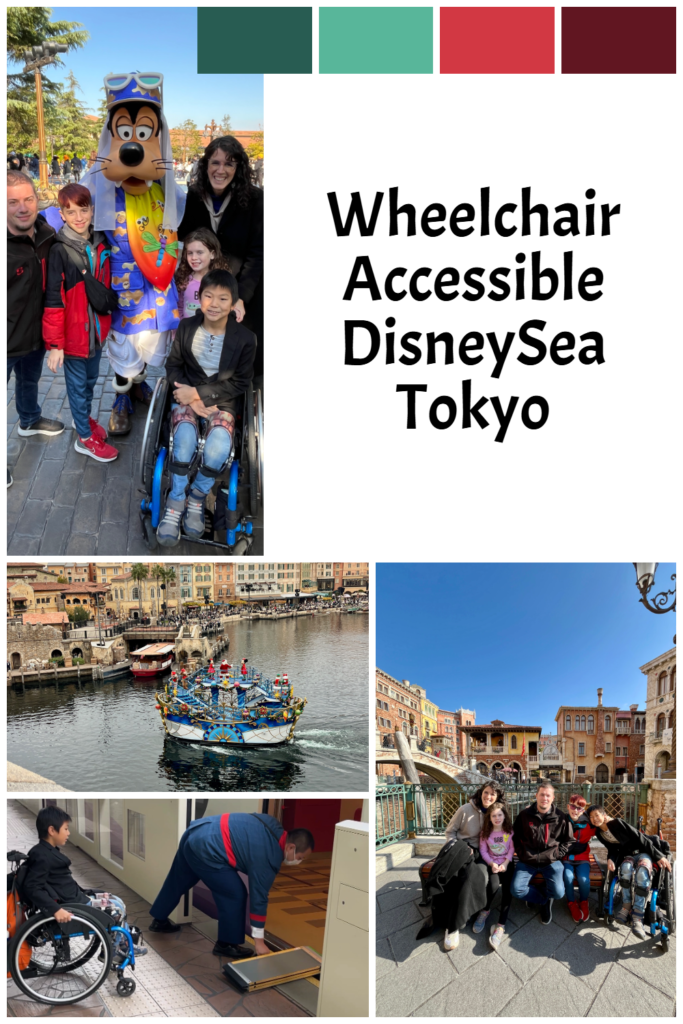
DisneySea ride accessibility felt less like an adventure and more like an ordeal. Each ride required a new interview with cast members. While staff were consistently polite and professional, the process required translation tech, took several minutes each time, and the questions were repetitive and tiring.
For those who are used to entering through the exit or skipping wait times, it’s also worth a reminder that Disney wait times are long. Between the time spent in accessibility interviews and waiting the standard ride time, we only actually made it onto five rides all day.
DisneySea Ride Restrictions
Most importantly, many wheelchair users will not be able to ride at all.
Not only does almost every ride require a transfer; but, even if you’re able to roll onto the carousel or Toy Story Mania, a consistent requirement is the ability to exit the ride independently in the event of an emergency. If a guest cannot self-transfer or evacuate without assistance, access may be denied, even if the ride itself appears manageable.
This is a significant departure from accessibility policies at U.S. Disney parks, and it can be deeply disappointing if you arrive expecting a similar experience.
In each ride interview, we clarified that we could help our son in a wheelchair to exit if needed. That seemed to suffice and counted as “without assistance” from cast members, but that’s not an option with older children and adults. If you can’t use a ladder without cast assistance, you can’t ride.
Shows and Entertainment
Most shows are performed in Japanese, which makes complete sense given the location. Still, it’s worth setting expectations. Jokes aren’t as funny when you don’t understand the punch line… or the joke…
We were sent away from all of the shows we attempted to attend, with an explanation that all shows are in Japanese, but we learned after our visit that there are exceptions to this rule. If you want a run down of shows that could make good options on the day of your visit, I suggest you pop into guest services to ask what may be available in English, or what shows are less communication-dependent.
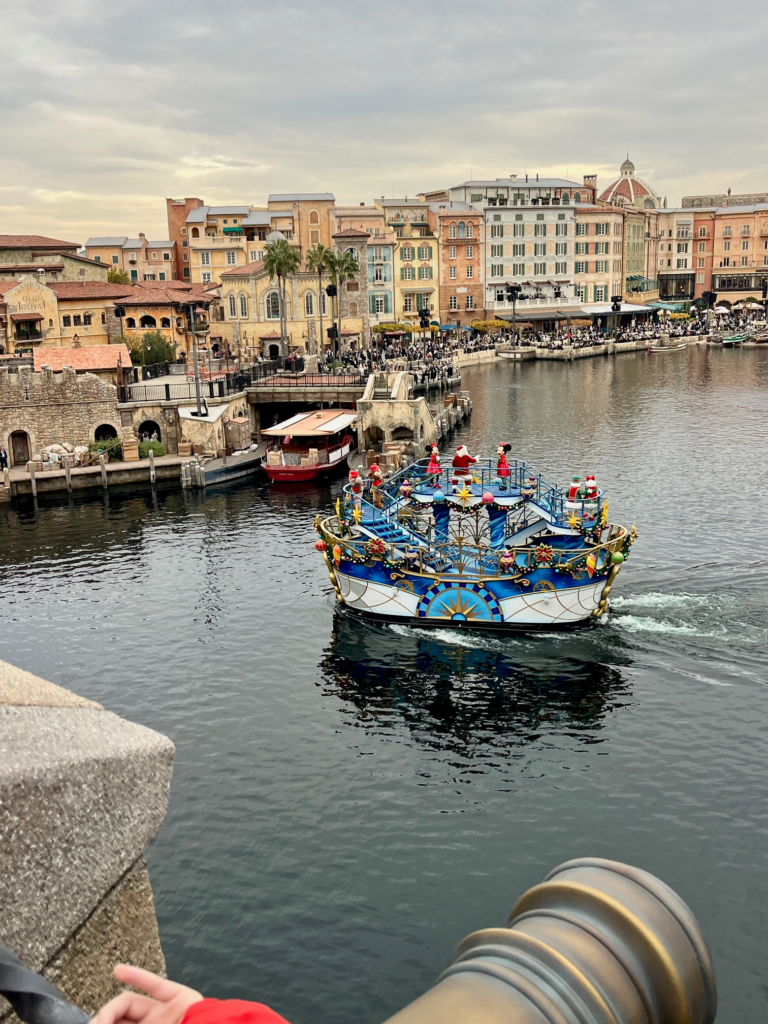
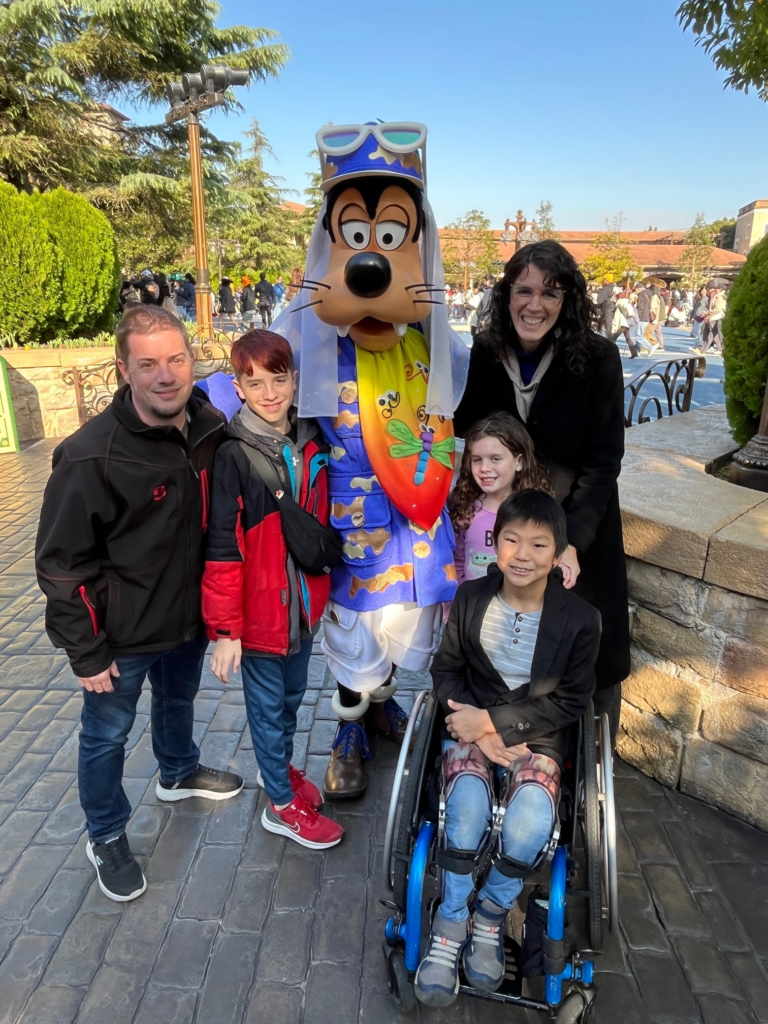
The parades are still fun – even if you don’t fully understand them. Everyone loves seeing Mickey and Minnie, regardless of what they have to say. Because the parades take place on the water, we also found we had better viewing opportunities since there were so many options on varying levels of the park.
So, Is DisneySea Wheelchair Accessible?
So, yes, but also no.
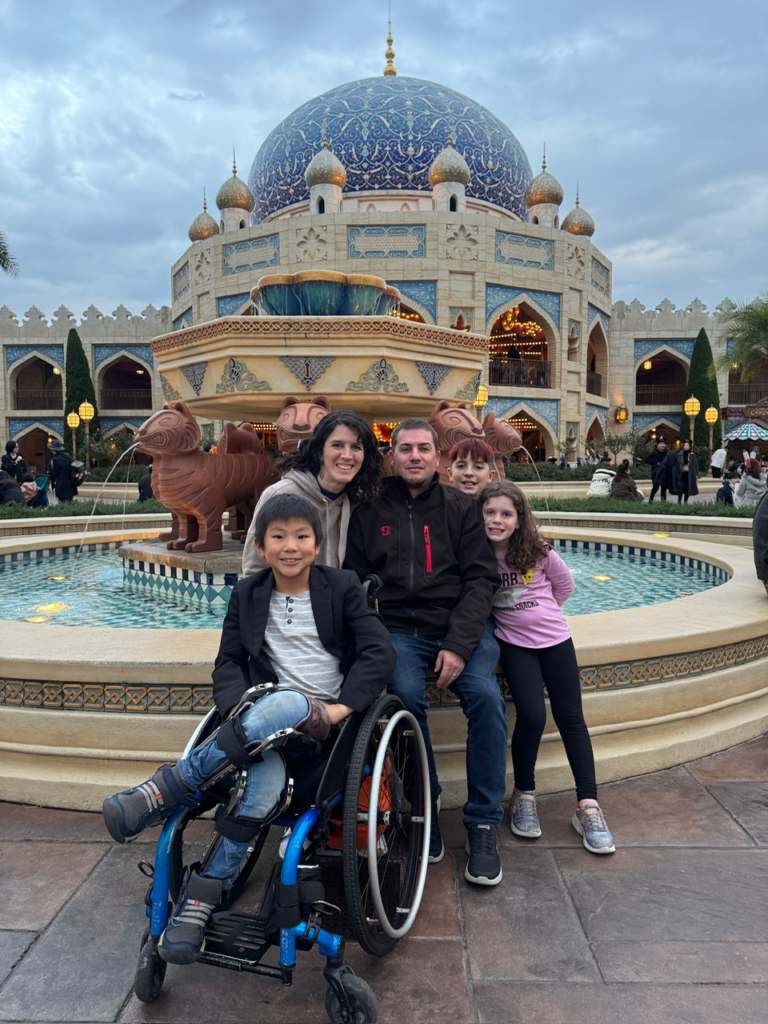
DisneySea is physically accessible in many meaningful ways. Transportation, paths, restrooms, seating, and rest areas are well designed and thoughtfully executed. We spent a full day and the only thing we found that we couldn’t access was one bridge in Venice. The park is easy to navigate and we were really pleased with the frequently available truly accessible restrooms.
That said, ride accessibility policies are strict, and for many wheelchair users, they will significantly limit what you’re able to experience.
If you’re considering Tokyo DisneySea as a wheelchair user, go in informed. Get your DisneySea disability discount tickets through the Tokyo Disney website, appreciate the beauty of the park, enjoy the spaces that are welcoming, and plan ahead for the documentation required, the emotional energy ride access may demand, and/or the possibility of skipping the rides and enjoying the churros.
For families navigating disability and travel, knowledge is power. I hope this helps you decide whether DisneySea is the right fit for your Tokyo itinerary.
If you’re looking for some easier options for your accessible trip to Japan, check out our IG story highlights from our trip.
Wheelchair Accessibility FAQs for Tokyo’s DisneySea
Is Tokyo DisneySea wheelchair accessible?
Yes, DisneySea is wheelchair accessible in terms of transportation, pathways, restrooms, and seating. However, ride accessibility is limited by strict safety and evacuation requirements, which may prevent many wheelchair users from riding attractions. You must be able to use an evacuation ladder independently in order to ride.
Can wheelchair users ride attractions at DisneySea?
Some can, but many cannot. Rides require guests to be able to transfer independently and evacuate without assistance in an emergency. If a guest cannot self-transfer or exit the ride independently, access will be denied.
How is DisneySea different from U.S. Disney parks for wheelchair users?
Tokyo’s DisneySea does not use DAS. Their ride access program is evaluated individually at each ride and requires that you are able to exit via the emergency evacuation route without assistance. Once you’ve completed the mobility needs interview, you’ll be given a return time that matches the current wait time of the ride. Policies are stricter and vary by ride, which can significantly limit the experience for some wheelchair users.
Do I need disability documentation at DisneySea?
Yes. If you do not have a Japanese disability card, DisneySea requires an original hand-signed doctor’s note. They will not accept printed letters from patient portals. Without proper documentation, accessibility accommodations may not be granted.
Does DisneySea offer disability ticket discounts?
Yes, but with limitations. The discount applies to one guest with a disability and one companion. You must purchase discounted tickets directly through Disney, placing a separate order from other tickets.
Are there accessible restrooms at DisneySea?
Yes. Accessible restrooms are located throughout the park. Adult-sized changing tables are available in select locations, but they are not always clearly marked. Ask a cast member for assistance.
Is DisneySea accessible for children who use wheelchairs?
From a mobility and navigation standpoint, yes. Paths, rest areas, and many attractions outside of rides are accessible. However, ride restrictions may be especially challenging for children who cannot transfer or evacuate independently.
Is DisneySea worth visiting as a wheelchair user?
That depends on expectations. DisneySea has all of the Disney magic through fun, themed worlds, Disney characters, traditional Disney food options, and parades. The park is physically accessible in many ways, but strict ride accessibility policies can be frustrating and emotionally taxing. Visiting with realistic expectations and proper documentation is essential.