
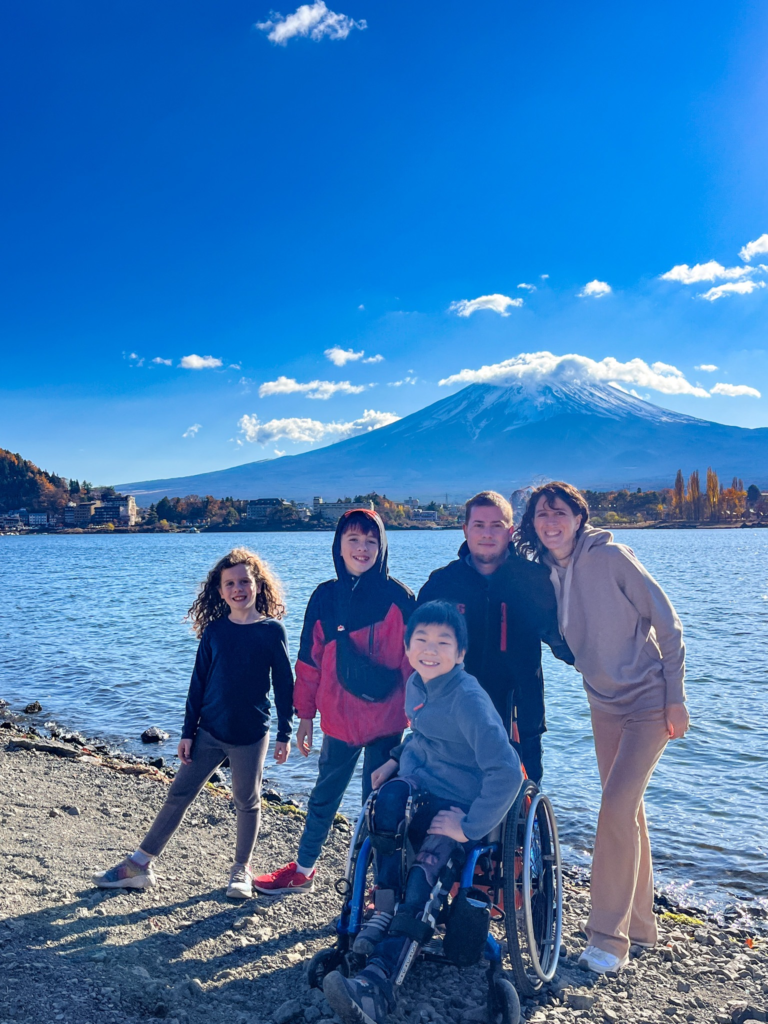
Planning a wheelchair accessible trip to Japan is overwhelming. Japan is much bigger than it looks on a map. You don’t plan a trip to Japan: you plan a trip to Tokyo, or Hiroshima, or any number of places within Japan. In spite of Accessible Japan‘s efforts to make planning for a wheelchair friendly trip to Japan seamless, narrowing down where to go and what not to miss can still feel completely overwhelming. We chose the things we wanted to experience, Pokémon, ninjas, and other niche bits of culture, and narrowed our locations down based on the map of experiences. We ended up with the typical first trip to Japan: Tokyo, Osaka, and Kyoto — with an additional detour to Kumamoto for an active volcano and onsen (hot springs).
Wheelchair accessibility in Japan is a mixed batch. Tokyo and Osaka were even easier to navigate with a wheelchair than I expected. Rural areas like Kurasako were even more challenging than I expected. Once you know where you’re going, I highly recommend resources like Accessible Japan, Japan’s tourism accessibility site, and Roll With A Smile blog.
I don’t have the experience to plan your full trip, but I do have some family wins that surprised us with their accessibility. The following are seven family experiences in Japan that you absolutely shouldn’t miss. From making noodles in Osaka to ninja training in Kyoto and lakeside paths beneath Mt. Fuji, these were the experiences that became unexpected highlights of our family’s trip to Japan.
Wheelchair Friendly Cup Noodle Factory Experience, Osaka
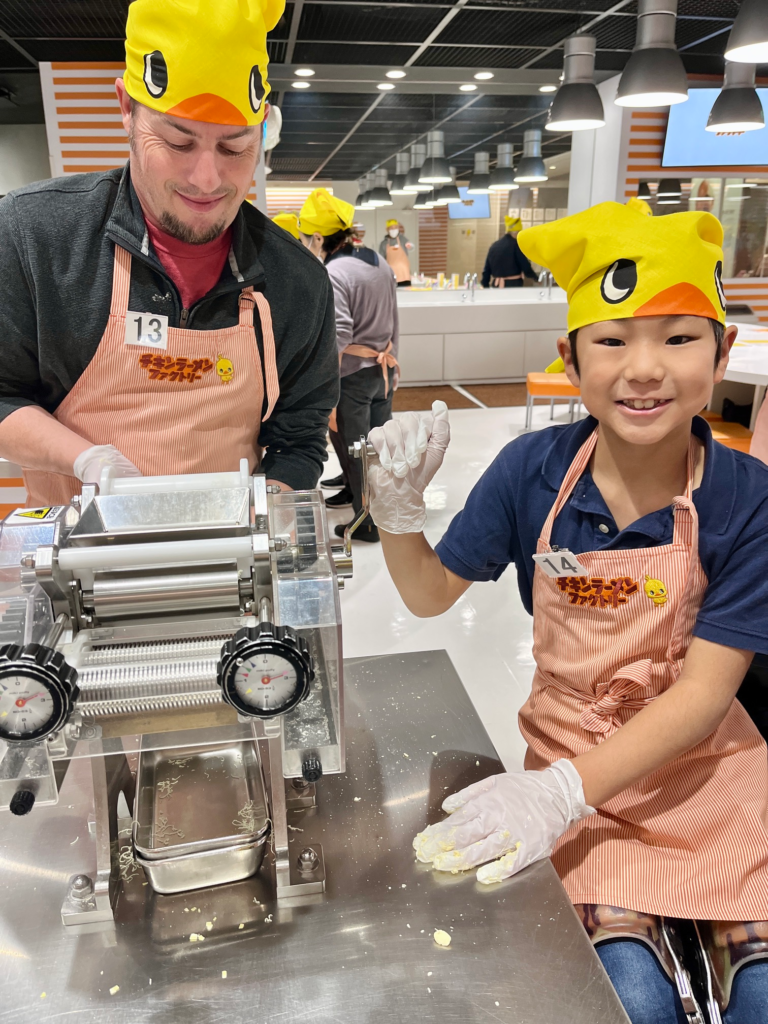
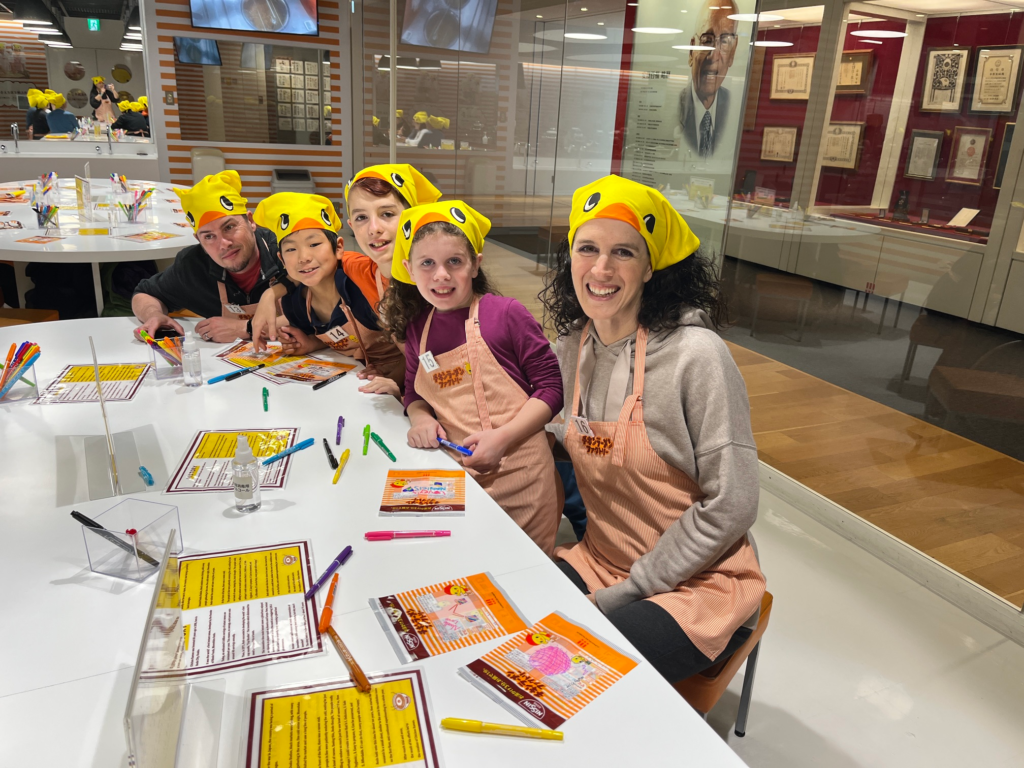
The birthplace of Cup Noodles is in Osaka. The museum is cool, even though it’s in Japanese with very little translated. It ended up a favorite part of our wheelchair accessible Japan trip.
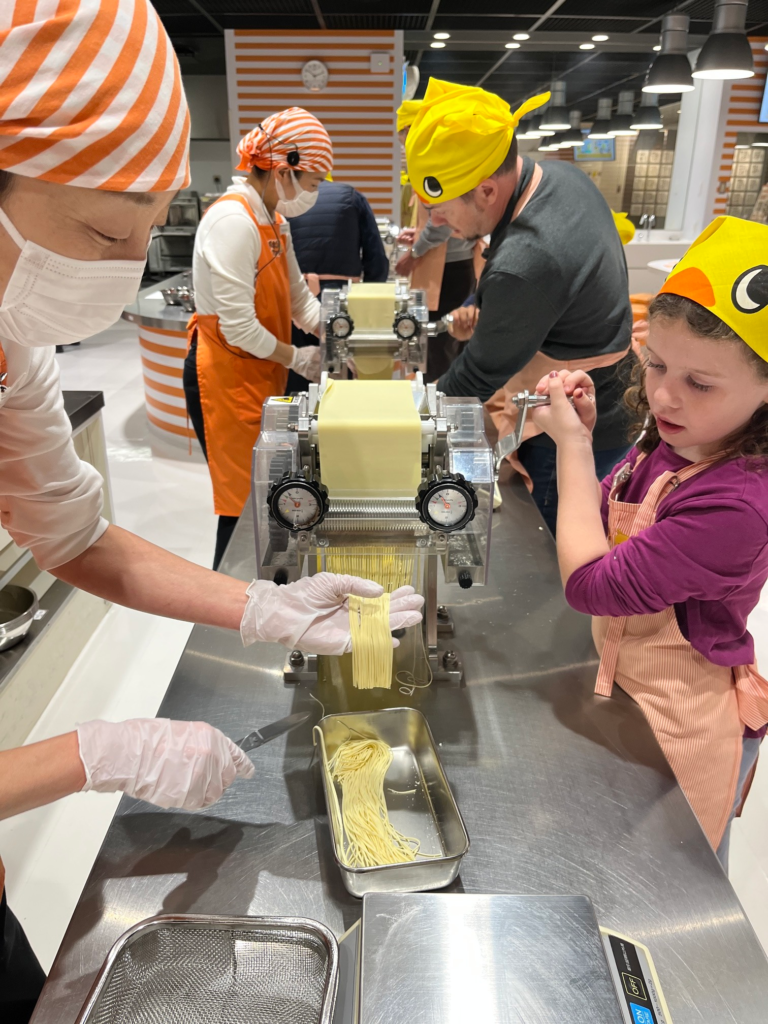
For a small fee, you can purchase a cup to decorate and then mix your own flavors for a tasty Cup Noodle that’s uniquely yours. Our favorite part, which seems to be Osaka’s best kept secret, is the noodle making experience upstairs.
An elevator takes guests to the factory floor where you’ll put on an apron and bandana before mixing, rolling, and cutting your own noodles. Watching the noodles move through the frying and packaging process makes you appreciate how a few simple ingredients became a global phenomenon.
The experience was surprisingly wheelchair friendly. The room was spacious and easy to navigate, with accessible restrooms on both floors. The prep tables were slightly too low for our son to roll fully underneath, but he was still able to comfortably participate from an angle and easily reach everything he needed.
Admission is less than $8 USD for adults and half for kids. That includes the two packages of noodles that you get to make and keep – saving you money on lunch!
Accessibility Highlights
- Accessible restrooms
- Elevator access
- Wide open workspace
- Wheelchair accessible activity stations
- Family friendly
Check out the video of our wheelchair accessible noodle making experience in Japan, and the Cup Noodle Museum
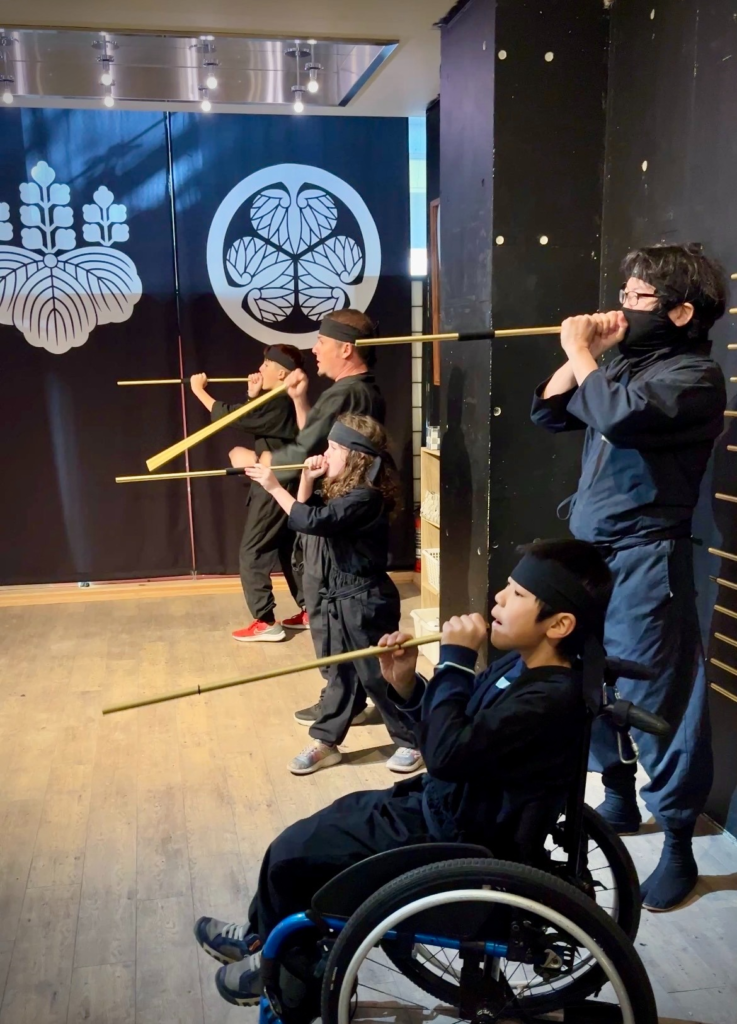
Wheelchair Accessible Ninja Experience in Kyoto
If you’ve never seen a wheelchair-using ninja, it’s time to change that. The Kyoto Ninja Experience begins in a zero-entry room where you’ll change into your ninja attire. Feel free to only change the top half, if that’s easier. Once you’re ready, there’s an elevator to the upstairs training room where after discovering the ancient ways of the ninja you’ll learn to throw ninja stars, shoot blow darts, and battle with foam swords.
The experience itself was surprisingly wheelchair accessible and easy to participate in. The staff was accommodating, the activities were interactive and designed for a range of abilities, and the training room had enough space for maneuvering comfortably in a wheelchair.
They do not have a bathroom, accessible or otherwise, in the ninja training facility, but there are accessible restrooms in the Samurai Museum.
Your ninja training includes free admission and a guided tour through the Samurai museum. The two buildings are about four blocks apart, but the streets were easy to navigate on wheels.
Yes, it’s touristy — but it’s also interactive, memorable, and one of the most fun cultural experiences we had with kids in Japan. My kids will be talking about this one for a long time.
Accessibility Highlights
- Zero-entry entrance
- Elevator access
- Spacious training area
- Wheelchair-friendly activities
- Accessible restroom nearby
Check out our video review of our wheelchair accessible ninja experience
Wheelchair Accessible Family Karaoke in Osaka
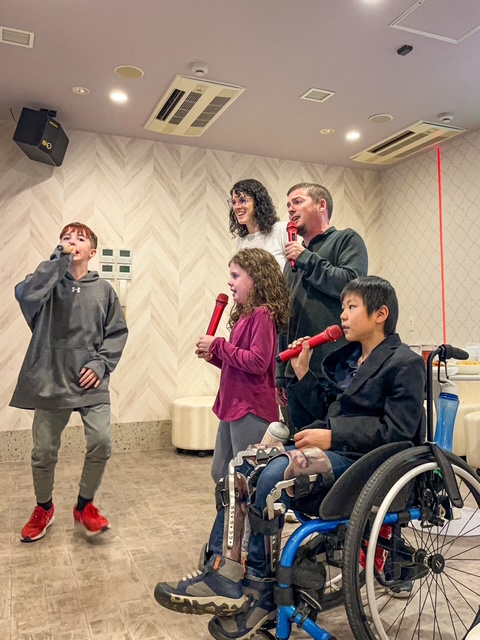
Karaoke is a huge part of Japanese culture, but finding wheelchair accessible family karaoke in Japan wasn’t nearly as easy as I expected.
Unlike karaoke in the U.S., Japanese karaoke typically happens in private rooms reserved by the hour. Instead of singing in front of strangers, your family gets its own space to eat, laugh, and sing as loudly as you’d like.
After researching family-friendly karaoke chains, I landed on Rainbow Karaoke in Osaka because of their daytime family pricing. They also have an endless supply of family-friendly music in both English and Japanese. Instead of operating primarily as a bar, they serve up food to order, delivered to your karaoke room, in addition to an endless soft drink and ice cream bar. It was pretty much a kid’s dream.
It’s difficult to find accessibility information online, but I can vouch for Karaoke Rainbow Namba (Osaka). They don’t have a website, but you can book online through third parties. I found it easiest to pick a package on the spot. The entrance looks a bit like you’re going clubbing downtown as you wait for the elevator to the fourth floor. Once you’re upstairs, you can choose your drink package – you can stay all night with your whole family for much less than a hotel, but I don’t recommend it.
Important Accessibility Note
**There is a step up to the restroom. For families on a bladder schedule, it may be easy to just schedule around this barrier, but it may be a deal breaker for many.**
Accessibility Notes
- Elevator access
- Spacious private rooms
- Family friendly atmosphere
- Food delivered to room
- Restroom has step barrier
Check out the video review of our wheelchair accessible karaoke experience in Japan
Our Experience Staying at the Pokémon Hotel With a Wheelchair
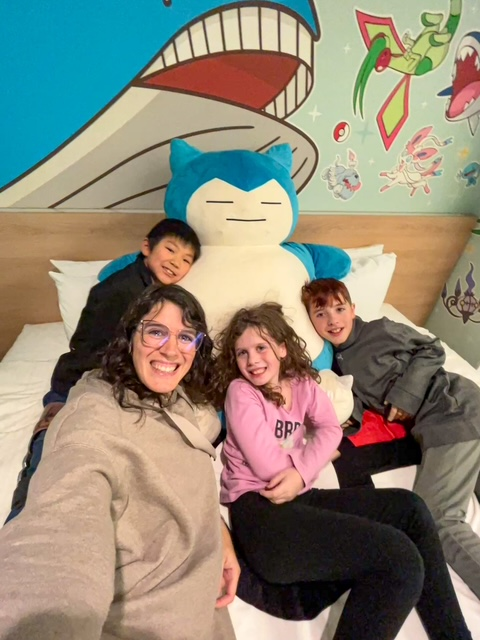
Families like mine tend to skip the Pokémon Hotel because they don’t have ADA Pokémon rooms. Because the hotel was at the very top of my kids’ list, we decided to try.
The room layout was spacious, the dining room table was perfect for rolling under, and they brought us a shower chair for our low height tub, which made it accessible for us. They also delivered hand rails for the toilet for easy transfers. That said, the toilet area of the bathroom was too small to close the door with a wheelchair inside. The bottom bunk was low and easy for our son. It’s not an ADA room, but you may be able to make it work.
Check out our accessible Pokémon Hotel room tour
Why Mt. Fuji Was Surprisingly Wheelchair Accessible
Mt. Fuji ended up being my favorite view in all of Japan, and I was genuinely surprised by how wheelchair accessible the area around Lake Kawaguchi was.
We boarded the Red Line sightseeing bus using a foldable ramp and spent the day exploring the north side of Lake Kawaguchi beneath stunning views of Mt. Fuji. You don’t need to worry about purchasing a multi-bus pass unless you have a few days to explore.
The lakeside walking paths were paved, smooth, and easy to navigate with a wheelchair. Even better, accessible restrooms were easy to find throughout the area — there’s even an accessible toilet map!
We enjoyed lunch in town at wheelchair accessible Fuji Tempura IDATEN.
Accessibility Highlights
- Accessible sightseeing bus
- Paved lakeside paths
- Multiple accessible restrooms
- Scenic step-free viewpoints
- Wheelchair accessible dining nearby
See why our accessible Mt Fuji experience was a little different
Nara Deer Park for Wheelchair Users
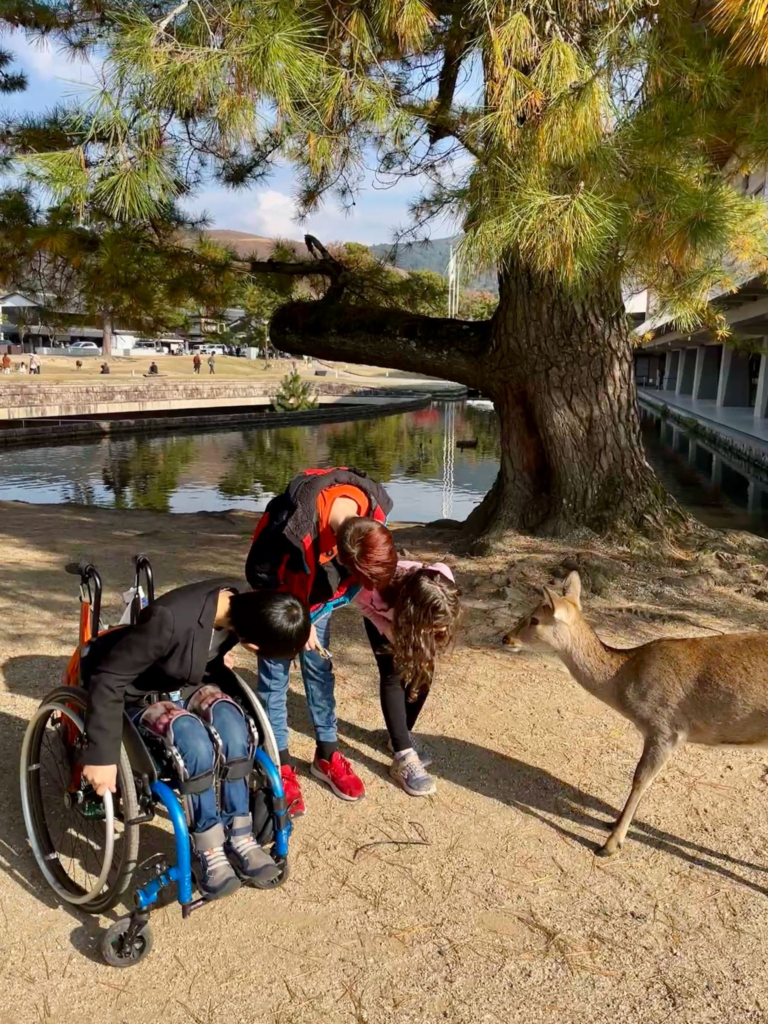
The famous deer of Nara Park really do bow to you in hopes of a treat. More importantly, in terms of accessibility, they’re happy to meet you on the sidewalk. There’s no need to wander into grass or gravel to get to the deer. They will come to you. Many of the shops and restaurants in town are zero-entry. There is an accessible public restroom outside of Todai-ji Namdaimon as well as in the train station.
More tips on wheelchair accessible Nara Park
Hiroshima Accessibility
Hiroshima ended up being one of the easiest cities for us to explore with a wheelchair.
Many of the main attractions are concentrated within a relatively small area, which meant we could spend most of our time exploring accessible sidewalks and paved walking paths instead of constantly navigating crowded trains and subway stations.
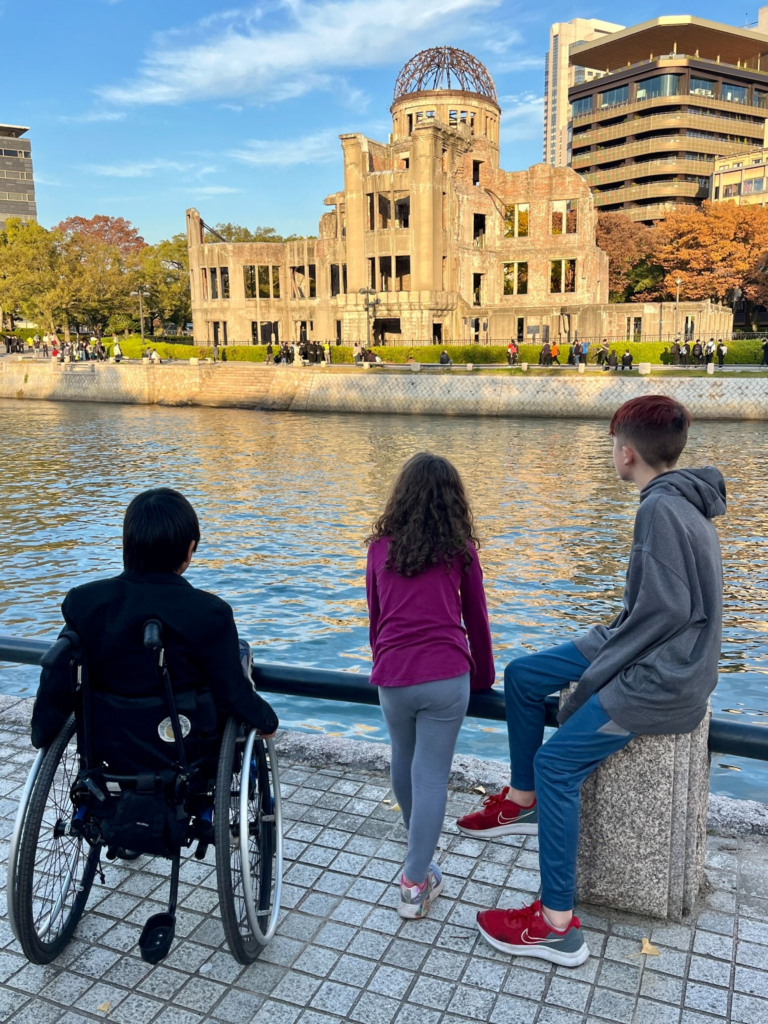
The Peace Memorial Museum offers an accessible route via elevator and has spacious accessible restrooms equipped with additional accessibility features. The museum also offers discounted admission for disabled visitors and one companion, though you’ll need official proof of disability. Since the U.S. doesn’t issue disability ID cards, I carry a signed disability letter from our doctor while traveling internationally.
Accessibility Highlights
- Easy wheelchair navigation throughout central Hiroshima
- Smooth paved sidewalks
- Compact, walkable attractions
- Elevator access at Peace Memorial Museum
- Accessible public restrooms
See more on wheelchair accessible Hiroshima
What Surprised Us Most About Accessibility in Japan
I expected Tokyo to be wheelchair accessible thanks to all of their infrastructure updates before hosting the Paralympics. While it did not disappoint, it’s important to remember that it’s still an old city. This impacted us the most in dining. There were several restaurants that were not prepared for wheelchair users.
The train and public transportation systems are beautifully accessible if you plan ahead. If you just show up to hop a train, you may not be able to find an accessible option and without assistance boarding may be harder than you expected.
Overall, we tried a lot of things that had no accessibility information available online and we were rarely disappointed.
Google maps usually has accurate accessibility information. If accessibility information is not available, have a back up plan.