
Theme parks are often marketed as “accessible,” but for wheelchair users and families navigating mobility disabilities, that word can mean very different things especially depending on where you are in the world and what kind of access you actually need.
Not all wheelchair accessible theme parks offer accessible rides for wheelchair users who cannot transfer independently.
While some may be content with shows and parades, too often wheelchair users arrive at supposedly accessible amusement parks only to discover there are very few accessible rides for wheelchair users.
After visiting theme parks across the U.S., Europe, and Asia with a wheelchair user, I’ve learned this: physical accessibility is only one piece of the puzzle. Ride policies, evacuation requirements, documentation rules, and even cultural attitudes toward disability can dramatically shape the experience.
This guide brings together everything I’ve learned to help families make informed decisions before buying tickets, along with direct links to detailed, park-specific accessibility reviews.
What “Wheelchair Accessible” Really Means at Theme Parks
While some older and smaller theme parks still operate around loose gravel and stairs, most theme parks do a decent job with basic mobility access:
- Step-free entry
- Wide pathways
- Accessible restrooms
- Wheelchair seating at shows
Where wheelchair friendly theme parks often fall short is ride accessibility.
Many attractions require guests to:
- Transfer independently
- Maintain specific seated positions
- Evacuate without assistance in an emergency
These policies vary widely by country and operator, and they are rarely explained clearly on park websites.
Disney’s California Adventure Park and Walt Disney World are the only theme parks for wheelchair users where we’ve consistently found enough accessible rides that don’t require a transfer to make the admission price worthwhile for non-transferring wheelchair users – aside from Morgan’s Wonderland.
Why Ride Evacuation Policies Matter More Than You Think
Ride evacuation policies are one of the biggest determining factors in whether a theme park is truly accessible for wheelchair users.
In the U.S., disability access policies, particularly at Disney parks, are shaped by ADA guidelines and often allow for more flexibility and accommodation.
Internationally, policies are often stricter. Some parks require full independent evacuation with no exceptions, which can exclude many wheelchair users, even when the ride itself seems manageable.
Understanding this distinction ahead of time can prevent disappointment and emotional exhaustion on park day.
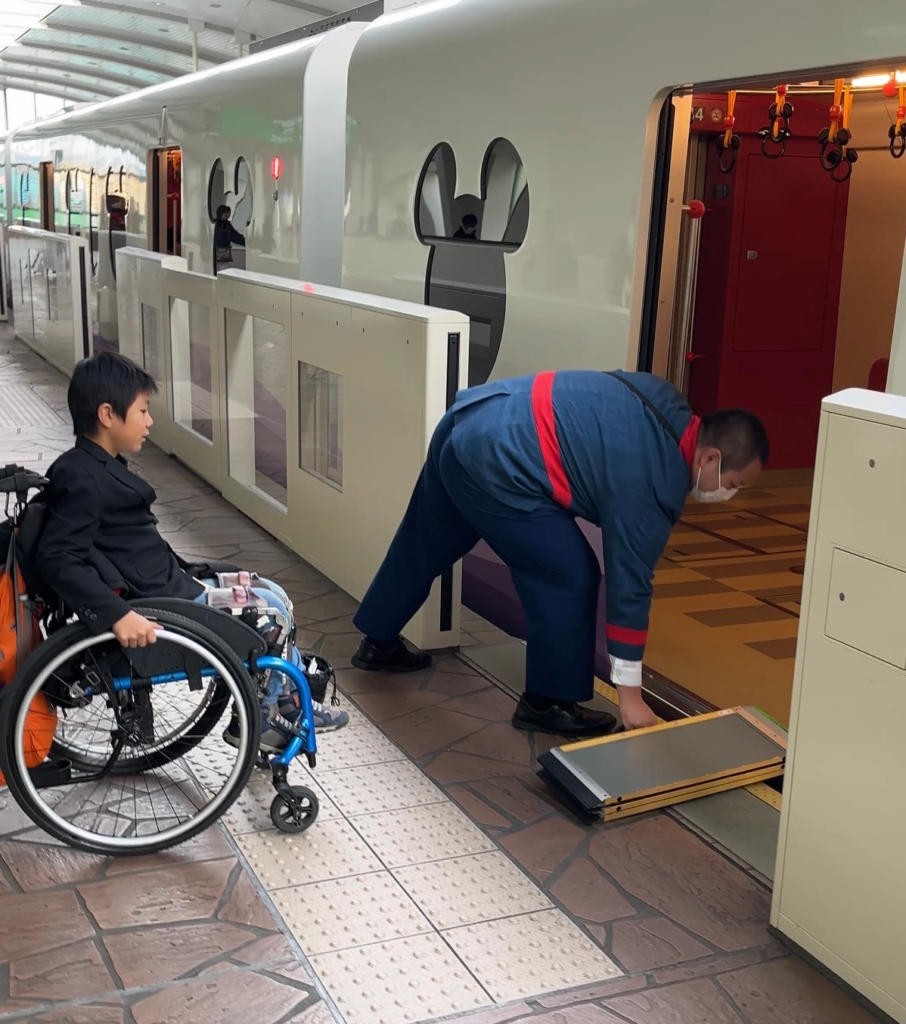
Japan’s Disney Parks, for example, require independent evacuation. The staff are not able to assist in an emergency. Each time we were asked, “Is he able to evacuate independently?” I replied, “We can help him to evacuate.” I’m not sure if the expectation was that he climb a ladder on his own, but my answer that we would help him to get out was sufficient every time. Unfortunately, that does nothing to help a solo traveler.
Documentation: A Hidden Barrier for International Theme Parks
Another factor families often overlook is disability documentation.
Some international parks require:
- Government-issued disability cards
- Hand-signed doctor’s notes
- In-person verification
Printed letters from patient portals may not be accepted. Documentation requirements can vary not only by country, but by park.
This is one of the biggest differences between U.S. and international theme park accessibility and one of the least clearly communicated.
Your best bet is to have a letter of disability signed by your doctor. This cannot be a photocopy. An original signature is usually required.
Wheelchair Accessible Disney Parks and Accessible Disney Rides Around the World
Disney parks are often assumed to offer a consistent experience worldwide. In reality, both accessibility and ride policies vary significantly by location.
Wheelchair Accessible Walt Disney World (Florida)
Generally considered one of the most ADA accessible theme parks in the world, with extensive ride access, transportation options, and well-established disability accommodations. There are several rides that don’t require a transfer, shows and shops are accessible, and they have systems in place for neurodivergent needs.
→ Read the full wheelchair accessibility guide to Walt Disney World
Wheelchair Accessible Disneyland California
The original Disney theme park is the least wheelchair friendly because of its age. The rides need to be entered via exit, which count on a cast member noticing you. The carousel, riverboat, jungle cruise, and Finding Nemo rides don’t require a transfer. Most shows, shops, restaurants and attractions are still accessible.
→Read the Disneyland California Accessibility Page
Wheelchair Accessible Disney California Adventure Park
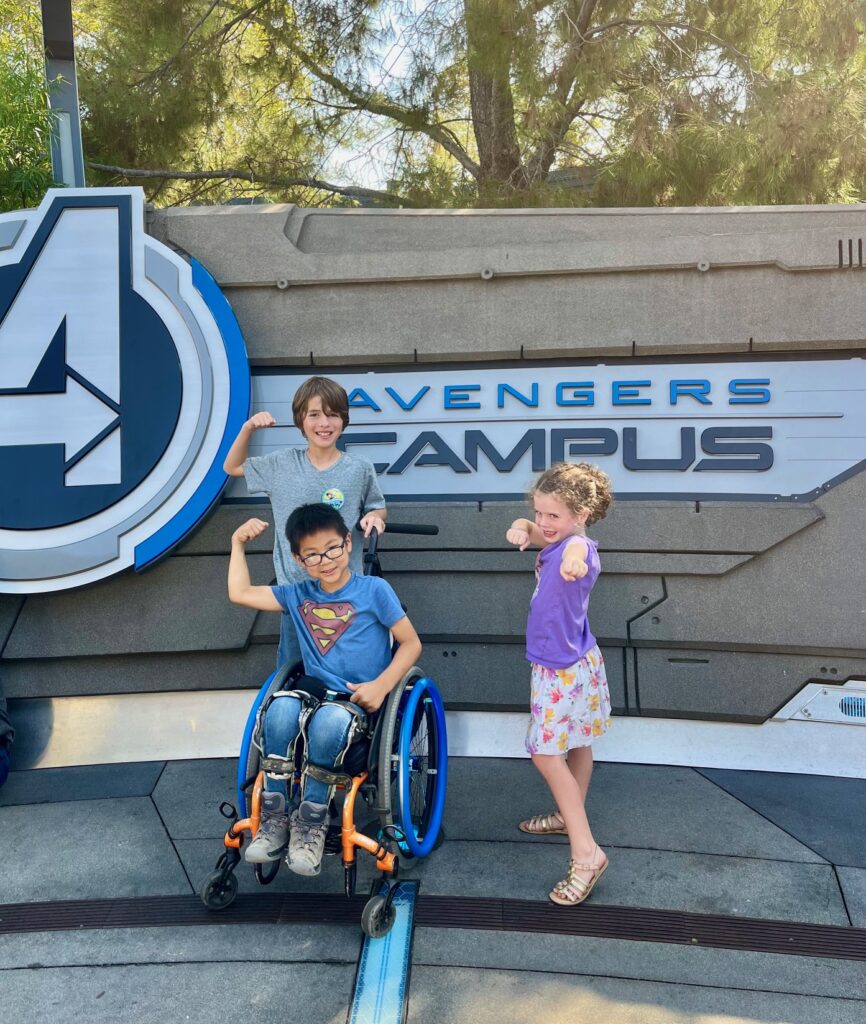
Disney California Adventure Park is the most accessible of Disney’s parks – also because of age! As a newer park, it offers more roll-on rides, wider line routes, and ADA paths and structures throughout.
→ Read the full wheelchair accessible Disney California Adventure Park guide or watch our video review
Wheelchair Accessible Disneyland Paris
Disneyland Paris is physically accessible in most areas, but has more ride restrictions and documentation requirements than U.S. parks. Know before you go. Aladdin’s Carpet, It’s A Small World, Buzz Lightyear’s Laser Blast, did not require a transfer. Discount for disabled guest and companion.
→Read the full wheelchair accessibility guide to Disneyland Paris
Wheelchair Accessible Tokyo DisneySea
Stunningly designed and physically accessible—but with strict ride evacuation policies and documentation requirements that can significantly limit ride access for wheelchair users. Discount for disabled guest and companion.
→ Read the full wheelchair accessible DisneySea guide or watch our video review
Wheelchair Accessible Disney Adventure (Disney Cruise Lines)
I’ve heard great things about accessibility on Disney’s Cruise line, but we haven’t had the opportunity to experience it. One thing I know across Disney experiences is that the Cast Members are well trained to help guests. If they can make it work for you, they will.
Accessibility varies depending on the specific experience and ship or destination. Advance planning is essential.
→ Read more about Disney Cruise Line accessibility
| Theme Park | Why It Stands Out |
|---|---|
| Morgan’s Wonderland | Every ride is wheelchair accessible |
| Disney California Adventure | Most transfer-free ride options outside Morgan’s |
| Walt Disney World | Large number of accessible attractions and transportation |
| Nickelodeon Universe | Indoor accessibility and elevators to attractions |
Wheelchair Accessible Non-Disney Theme Parks
Accessibility experiences can vary even more widely outside of Disney properties.
DelGrosso’s Amusement Park and Laguna Splash
Fairly typical ride accessibility program, in an older park with lots of gravel, but an incredibly wheelchair friendly water park.
→ Read their ride accessibility guide or watch our video review
Wheelchair Accessible Hersheypark (Pennsylvania)
Adorable theme park with improving navigational accessibility, but only one ride that doesn’t require a transfer. Added bonus of being next to Chocolate World and surrounded by other Hershey attractions.
→ Read the full Hersheypark wheelchair accessibility guide
Wheelchair Accessible Kings Island (Ohio)
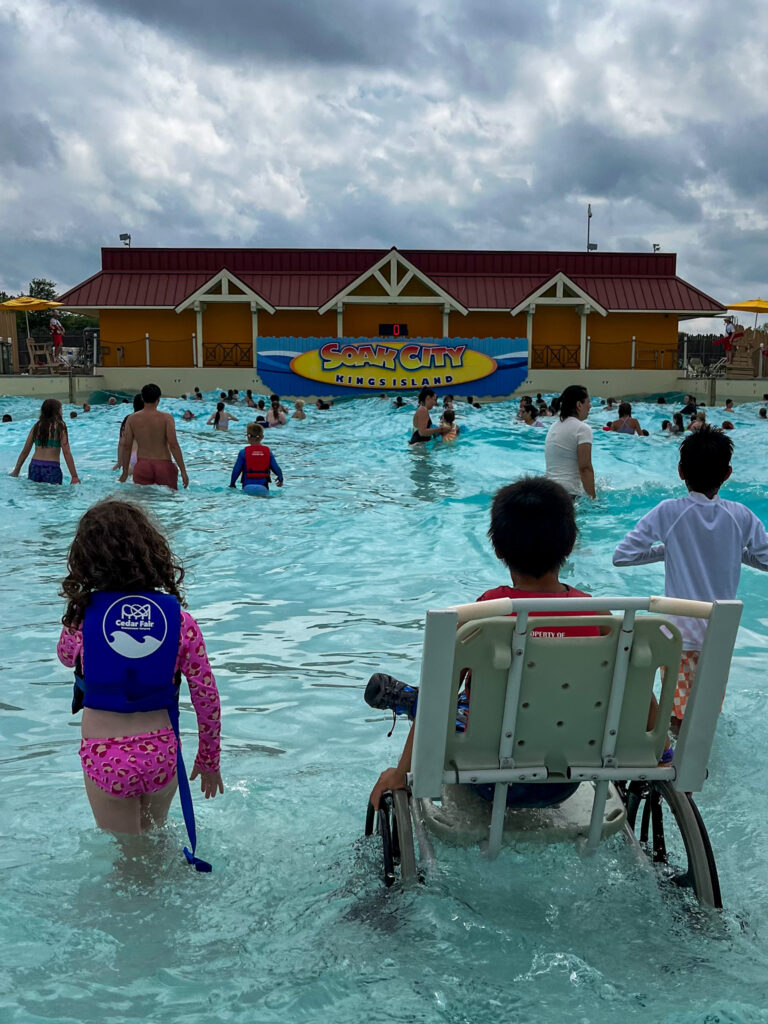
Kings Island is over 3x the size of Disneyland, has an all abilities playground, adult sized changing tables, and a water wheelchair for limitless play in their water park, but only one ride that doesn’t require a transfer (and one roller coaster adapted for easier transfers).
→ Read the full Kings Island accessibility guide or watch our video review
Accessibility at Knoebel’s (Pennsylvania)
America’s largest free-admission theme park is a throw back to simpler times. That means a lot of gravel and old rides, but they do work with IBCCES for both sensory friendliness and ride accessibility.
→ Read the full Knoebel’s accessibility guide or watch our video review
Morgan’s Wonderland
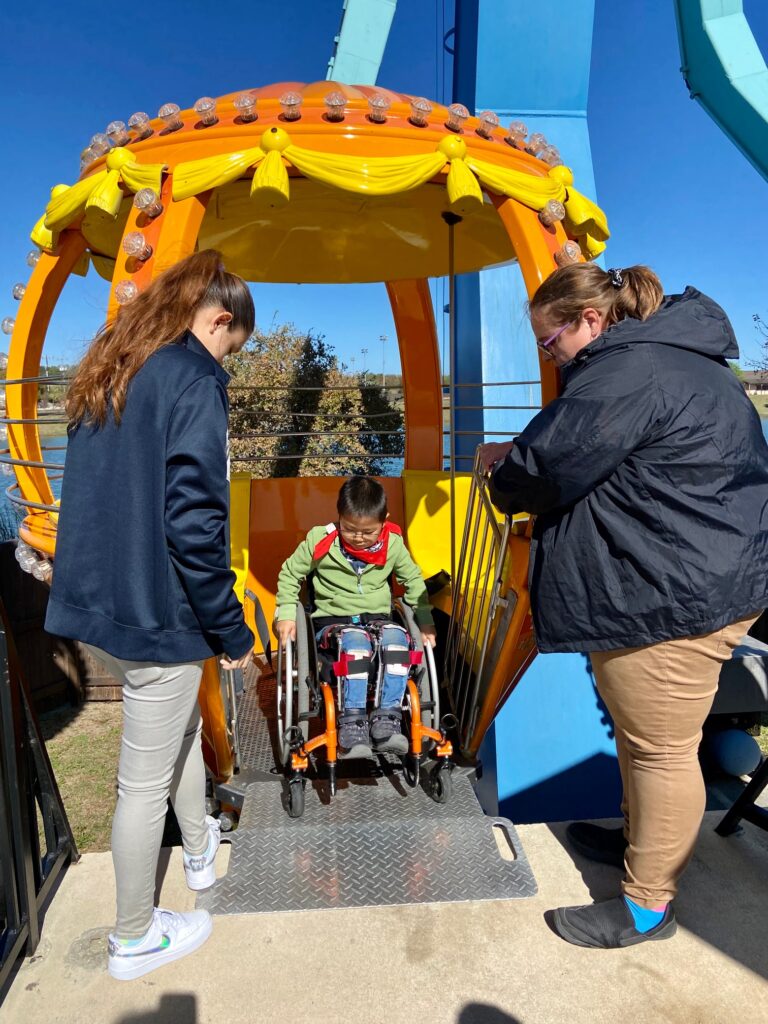
As the world’s only ultra accessible theme park, it doesn’t even feel fair to include this one. Every ride, shop, restaurant, restroom, playground, attraction, and show is fully wheelchair accessible, making it one of the only true theme parks designed specifically for wheelchair users and other guests with disabilities. No ride requires a wheelchair transfer.
→ Learn more about Morgan’s Wonderland
Wheelchair Accessible Nickelodeon Universe and Mall of America (Minnesota)
Mall of America has a head start on accessibility as an indoor theme park with no natural barriers. They have elevators to rollercoasters and a ride accessibility program.
→ Read the full Mall of America accessibility guide or watch our video review
Accessible Dutch Wonderland
Aimed at younger families, Dutch Wonderland offers a ride accessibility program that has you enter through the exits throughout this older theme park. The park itself is easy to navigate, but ride options may be restrictive.
→ Read the full Dutch Wonderland accessibility guide or watch our video review
Wheelchair Accessible LEGOLAND Florida
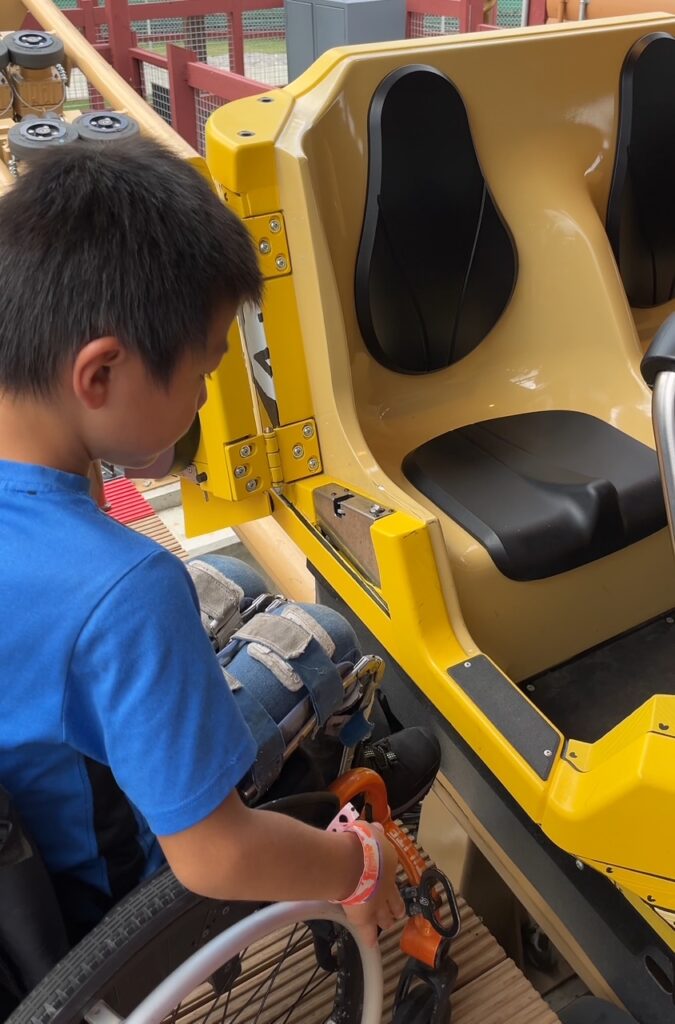
A Certified Autism Center, LEGOLAND is working to welcome all, though ride access still varies by attraction. Ride accessibility program through IBCCES.
→ Read the full LEGOLAND Florida accessibility guide
Accessibility at LEGOLAND New York
A newer park with thoughtful physical accessibility, but with ride policies that require careful review for wheelchair users.
→ Read the full LEGOLAND New York accessibility guide or check out our IG post
Wheelchair Accessible Universal Studios Hollywood
This was another hard one for us. The ride accessibility program was difficult to apply for and of little use to us in the park. There were no rides where wheelchair users could remain in their wheelchair, and the multiple levels of the park made it time consuming to navigate via shuttle.
→ Read the full Universal Studios Hollywood accessibility guide or watch our video review
How to Decide If a Theme Park Is Right for Your Family
Instead of asking, “Is this park accessible?” try asking:
- Can the wheelchair user transfer independently?
- Is independent evacuation possible in an emergency?
- Is disability documentation required?
- How much emotional energy will ride access discussions require?
- Are there enough non-ride experiences to make the day worthwhile?
Accessibility isn’t just about ramps—it’s about whether the experience feels welcoming, manageable, and dignified. A Disney park, or Kings Dominion, may offer enough in food and entertainment to decide it’s worth it with minimal rides. Knoebel’s free admission makes it a fun one even if you’re just going for pizza and games.
Frequently Asked Questions About Wheelchair Accessible Theme Parks
What is the most wheelchair accessible theme park in the United States?
Morgan’s Wonderland is the most wheelchair accessible theme park on the planet. Every space and ride is designed to be barrier-free.
For non-transferring wheelchair users, Disney California Adventure and Walt Disney World currently offer more ride options that don’t require a transfer from a wheelchair than other standard theme parks. Both parks also provide accessible transportation, wheelchair seating at shows, and strong disability accommodation systems.
However, the “best” park depends on your family’s needs, including evacuation ability, sensory needs, stamina, and how important rides are to your experience.
Are there any theme park rides where wheelchair users can stay in their wheelchair?
Yes, but they are still relatively rare.
All rides at Morgan’s Wonderland can be ridden in your wheelchair.
Some Disney attractions allow guests to remain in their wheelchair throughout the ride experience. Water rides, boat rides, train rides, and certain theater attractions are the most likely to offer roll-on access.
Policies vary by park and by disability, so it’s important to check current accessibility guides before visiting.
Do wheelchair users have to transfer on most theme park rides?
Usually, yes.
Most roller coasters and thrill rides require guests to transfer from their wheelchair into the ride vehicle. Some rides require minimal transfers, while others require stepping down, climbing, or maintaining specific body positions independently.
For travelers who cannot transfer independently, ride options may be limited at many parks.
Which theme parks are best for non-transferring wheelchair users?
Based on our experiences, the most accommodating parks for non-transferring wheelchair users include:
- Morgan’s Wonderland
- Walt Disney World (Florida)
- Disney California Adventure (California)
Many ADA accessible theme parks are physically accessible but still offer very few rides where guests can remain in their wheelchair.
Why do theme parks ask about evacuation ability?
Ride evacuation policies are tied to emergency procedures and safety regulations.
Many parks require guests to demonstrate that they could evacuate a ride safely during an emergency stop. In some countries, staff are not permitted to physically assist guests during evacuations.
This can become one of the biggest barriers for wheelchair users, especially internationally. If you’re visiting as the caregiver, clarify if you’re allowed to assist in evacuation. That enabled us to ride at Tokyo’s DisneySea.
Are international Disney parks less accessible than U.S. Disney parks?
Not less accessible physically, but policies are often stricter.
Many international parks have more rigid rules around:
- Emergency evacuation
- Ride eligibility
- Disability documentation
- Companion assistance
This is especially important for travelers visiting Disneyland Paris or Tokyo Disney Resort.
What disability documentation do theme parks require?
Requirements vary widely.
Some parks require:
- Government-issued disability identification
- A doctor’s note with an original signature
- Advance registration
- In-person verification at guest services
U.S. parks are often more flexible than international parks. Always check the park’s official accessibility policies before traveling.
Are accessible theme parks worth visiting if my child can’t ride many attractions?
Sometimes, absolutely.
Many families still find value in:
- Character experiences
- Food and themed environments
- Shows and parades
- Sensory experiences
- Water play areas
- Shared family memories
Some parks also offer free admission or discounted companion tickets, which can make the experience feel more worthwhile even with limited ride access.
What should families research before visiting an accessible theme park?
Before purchasing tickets, research:
- Ride transfer requirements
- Evacuation policies
- Accessibility maps
- Disability documentation rules
- Companion policies
- Accessible transportation
- Sensory accommodations
The more you know ahead of time, the easier it is to avoid disappointment and advocate confidently.
Accessible Theme Park Comparison Chart
*“Non-transfer rides” refers to attractions where guests can remain in their wheelchair for the full experience.
| Theme Park | Non-Transfer Rides | Independent Evacuation Required? | Disability Documentation Required? | Terrain & Navigation | Best For |
|---|---|---|---|---|---|
| Morgan’s Wonderland | Yes — all rides | No | No | Fully accessible throughout | Non-transferring wheelchair users |
| Walt Disney World (Florida) | Several | Usually flexible | No | Excellent transportation and pathways | Overall accessibility |
| Disney California Adventure | Several | Usually flexible | No | Excellent ADA design | Non-transferring wheelchair users |
| Disneyland California | Limited | Usually flexible | No | Older park with accessibility workarounds | Disney atmosphere and classic attractions |
| Disneyland Paris | Some | More restrictive | Yes | Physically accessible | International Disney travelers |
| Tokyo DisneySea | Very limited | Often yes | Yes | Excellent physical access | Guests able to assist with evacuation |
| Hersheypark | One | Ride dependent | No | Improving accessibility | Families combining Hershey attractions |
| Kings Island | One | Ride dependent | No | Large park with accessibility features | Water park and family amenities |
| Knoebels | Limited | Ride dependent | No | Gravel and older infrastructure | Budget-friendly family outings |
| Nickelodeon Universe (Mall of America) | Some | Ride dependent | No | Indoor and easy to navigate | Weather-friendly accessibility |
| Dutch Wonderland | Limited | Ride dependent | No | Easy navigation | Younger children |
| LEGOLAND Florida | Limited | Ride dependent | IBCCES program | Accessible newer design | Autism-friendly experiences |
| LEGOLAND New York | Limited | Ride dependent | IBCCES program | Newer accessible infrastructure | Families with younger children |
| Universal Studios Hollywood | None found without transfer | Ride dependent | IBCCES | Difficult multi-level navigation | Film fans and immersive experiences |
| DelGrosso’s & Laguna Splash | Limited dry rides | Ride dependent | No | Older park but accessible water park | Wheelchair accessible water play |